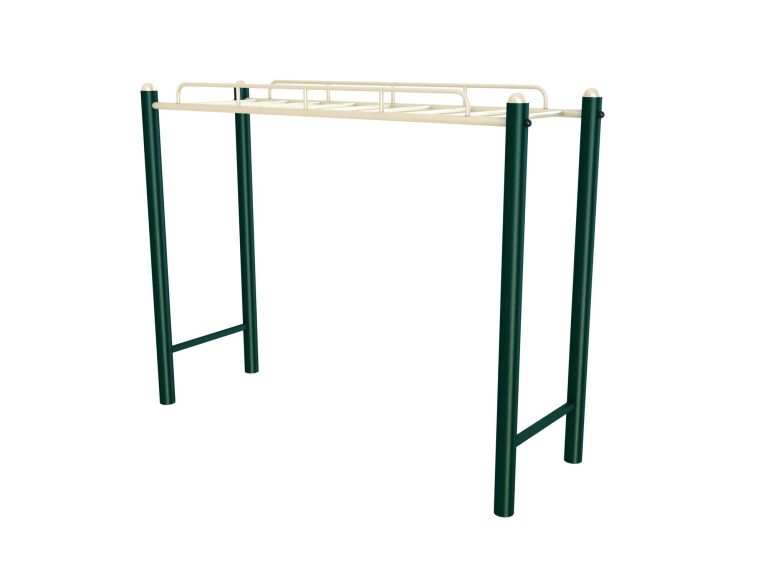
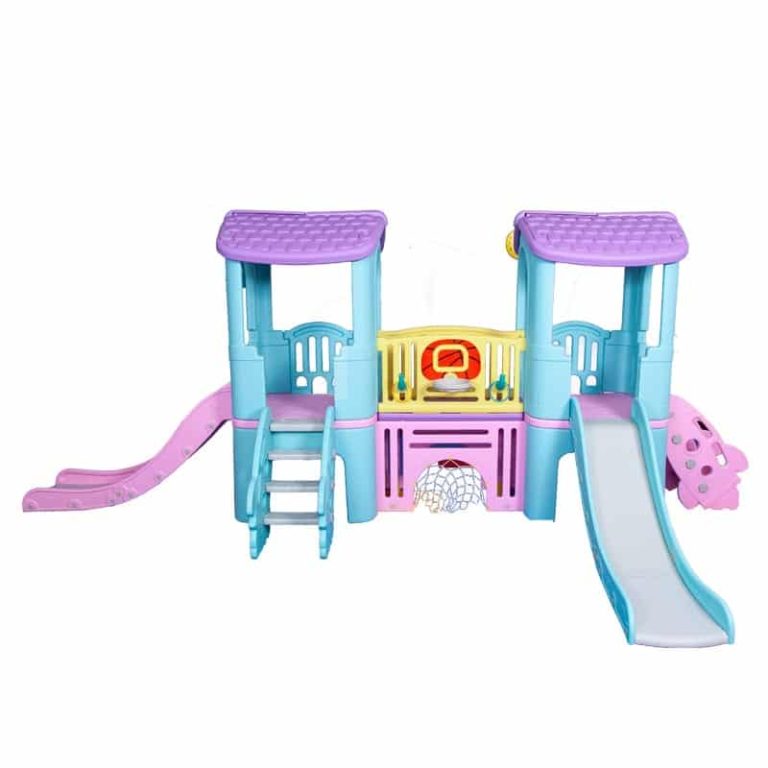
Choosing outdoor play equipment for Grade R is easier when you start with what the children need to practise, not with a catalogue. Most Grade R learners are aged five or six, and they are building the balance, coordination and strength they will rely on for sitting at a desk, holding a pencil and joining team games in the Foundation Phase.
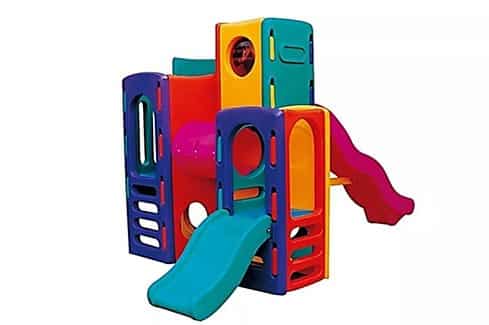
This guide links each type of equipment to a gross motor goal, gives you a phased starter set, shows how to zone the space and lists what to budget for beyond the equipment itself. It is written for anyone planning ECD outdoor play: ECD centres, Grade R classes in primary schools, estate creches and community ECD sites.
If you are planning for babies and toddlers as well, our creche outdoor play area equipment checklist covers the younger groups. This article goes deeper on the Grade R year.
Gross motor goals for a Grade R playground
Outdoor time in Grade R is learning time, and gross motor work fits naturally alongside Life Skills in the Foundation Phase. Plan around five movement areas so that every item you buy earns its place.
| Movement area | What children practise | What helps |
|---|---|---|
| Locomotor | Running, hopping, crawling, climbing | Open space, climbing frames, tunnels |
| Stability and balance | One-foot balance, rocking, swinging | Balance beams, rockers, spring riders, swings |
| Object control | Throwing, catching, kicking | Balls, hoops, beanbags and low goals |
| Crossing the midline | Reaching across the body | Music panels, chalk walls, digging, pouring |
| Upper-body strength | Hanging, pulling, carrying | Ladders, climbing walls, wheelbarrows |
In short: give children room to run, things to climb and balance on, objects to throw and catch, activities that reach across the body, and chances to hang, pull and carry. If your plan covers all five, you have a balanced Grade R playground.
A useful test when comparing options: equipment that children can climb, crawl under and turn into a pretend ship or shop adds more than something with only one use. Open space matters too, because running games need room that is not shared with a fall zone.
What each type of equipment develops
Climbing over, under and through
Climbing frames and jungle gyms build grip, leg and core strength, and teach children to plan where each hand and foot goes next. Crawling through tunnels and under platforms builds body awareness and an understanding of spatial words like over, under, behind and through.
Slides add controlled movement and a reason to climb back up. They also give teachers a natural place to practise turn taking and waiting.
Swinging, rocking and bouncing
Swings develop rhythm, core strength and the sense of balance in the inner ear, and learning to pump the legs is a coordination skill in its own right. Rockers and spring riders work the trunk and legs together, while a seesaw adds cooperation, because it only works when two children time their pushes.
Balancing and moving on wheels
Low balance beams, stepping logs and painted lines train stability and concentration. Tricycles, balance bikes and push carts develop bilateral coordination, steering and an early sense of road rules when you add a simple track with stop signs.
Sand, water and music
Digging, scooping and pouring strengthen shoulders, wrists and hands, which supports the fine motor work that comes later. Water tables add measuring and cause and effect, and outdoor music panels encourage children to reach across the body and keep a beat.
Loose parts and nature areas
Crates, planks, tyres, hoops and beanbags let children build, carry and invent games, which is where a lot of problem solving happens. Vegetable, flower or insect gardens add squatting, digging and carrying watering cans, plus a calmer place to observe and talk.
A phased starter set of outdoor play equipment for Grade R
Few centres or schools can buy everything at once, so phase your purchases. Start with the items that cover the most movement areas for the most children at the same time.
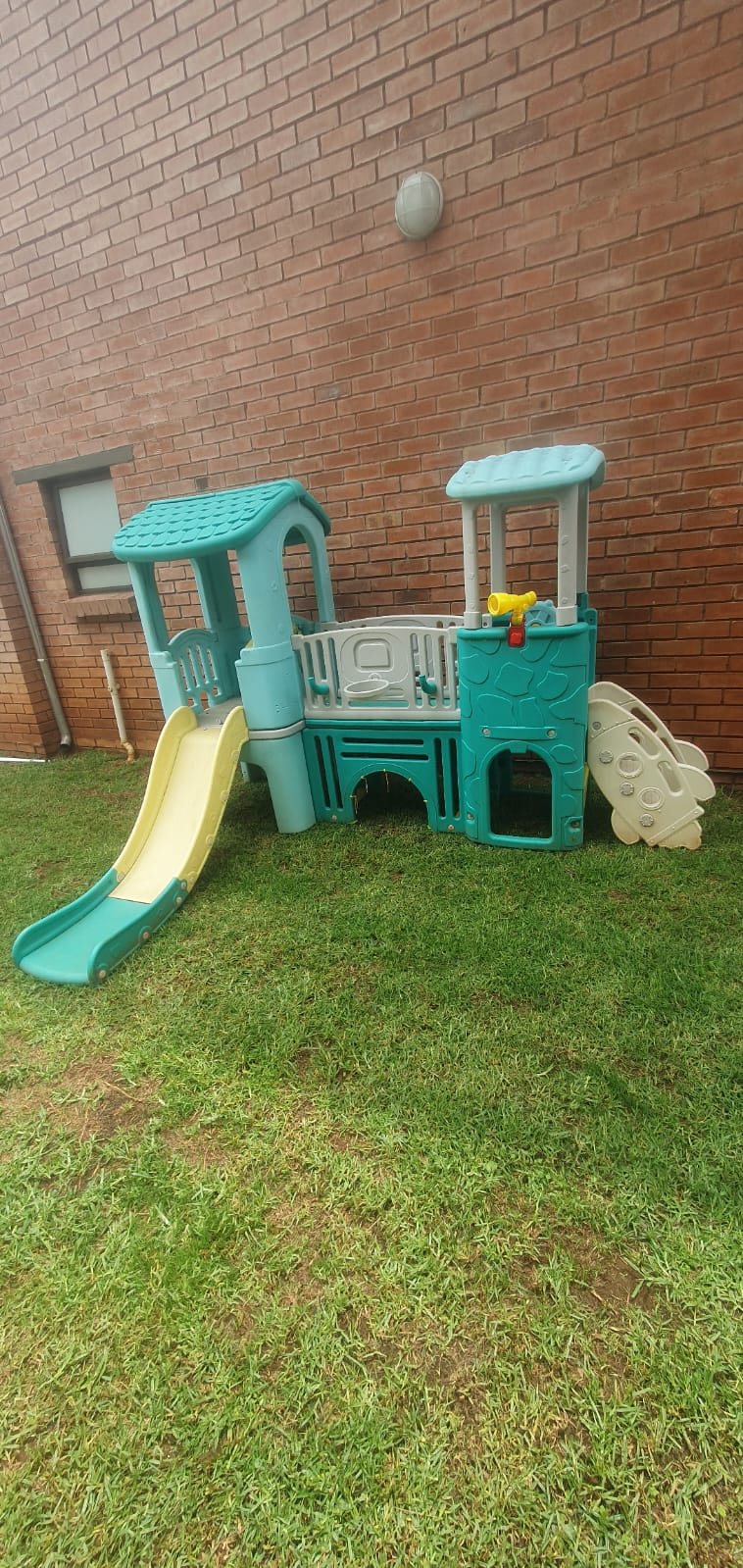
- Phase one, the core: one combination climbing structure with a slide, sized and rated for the age group (confirm this with the supplier), the surfacing it needs, shade over the main play area, a covered sandpit and a lockable box of loose parts such as balls, hoops and beanbags.
- Phase two, movement variety: swings or a group of rockers and spring riders, a low balance trail and a marked track for tricycles and push carts.
- Phase three, enrichment: a water table, outdoor music panels, raised garden beds and a shaded quiet corner with child-sized seating and a table for drawing or story time.
Plan the full layout before phase one, even if you buy later items next year. That way the first structure is placed where it will not block a future swing area or wheeled track.
Zoning a Grade R playground for safe supervision
Zoning keeps busy games from colliding with calm ones and makes supervision easier. Sketch the site on paper first, marking gates, taps, shade, drainage and where staff usually stand.
- Active zone: climbing structure, slide and swings, each with its fall zone kept clear of other equipment, paths and walls.
- Wheeled zone: a loop or track that does not cross the swing path or run past the foot of the slide.
- Sand and water zone: near a tap and away from the classroom door, so wet sand is not tracked indoors.
- Quiet and nature zone: garden beds, seating and shade on the calm side of the site.
- Open zone: a clear patch of grass or surfacing for running games, ball skills and group movement.
Stand where a teacher would stand and check that you can see every zone without walking. Avoid hidden corners behind sheds, tunnels or dense planting.
The fall zone is the area around equipment where a child could land, and it must have suitable surfacing and no obstacles. Our guide to critical fall height and matching surfacing to play equipment explains how to work this out.
Linking the indoor and outdoor areas
A covered stoep or verandah between the classroom and the playground makes a useful transition space for hats, shoes and water bottles, and doubles as a dry play spot. Keep routines the same indoors and out, such as the same tidy-up song and line-up spots. On rainy days, bring loose parts and gross motor activities inside, for example beanbag throws, masking tape balance lines and simple obstacle courses with mats.
Keeping Grade R apart from older learners
In a primary school, a dedicated, fenced Grade R area with its own gate works best. Staggered break times, clear signage and a staff member at the gate help too.
Surfacing, shade and South African conditions
Grass under a busy climbing structure soon wears into hard, compacted soil, so plan proper surfacing from the start. Common options include rubber wet pour, rubber tiles, artificial grass with an underlay, and loose fill such as sand or bark that needs regular raking and topping up.
Whatever you choose, ask the supplier whether the surfacing system has been tested to SANS 51177 for the fall height of the equipment it will sit under, and ask to see the test report. For artificial grass, ask whether an underlay is included and whether the full system has been impact tested.
- Sun: shade over climbing and sand areas protects children and makes surfaces and slides more comfortable to touch. Place shade before you fix equipment positions.
- Highveld hail and storms: check shade cloth, structures and surfaces after every storm, and ask how shade structures are designed to cope with heavy weather.
- Coastal sites: salt air is hard on steel, so ask about galvanising, powder coating and the type of fixings used, and rinse equipment regularly.
- Theft and vandalism: ask how equipment is anchored, lock loose parts away after school, and secure the area with fencing and a lockable gate.
What to budget for beyond the equipment
The equipment price is only part of the project. The equipment cost itself is driven mainly by the size of the structure, the number of play activities it combines, the materials and build quality, and whether it is made for commercial or home use. When you request quotes, make sure each of the items below is shown as a separate line so that you can compare like with like.
- Site preparation: levelling, removing roots or rubble, and dealing with slopes or poor drainage.
- Surfacing: the type and depth needed, and the area it must cover, which grows with the fall zones.
- Installation: anchoring, assembly and access to the site for delivery vehicles.
- Shade: shade cloth or structures over the main play zones.
- Fencing and gates: especially for a Grade R area inside a larger school.
- Loose parts and storage: balls, hoops and crates, plus somewhere lockable to keep them.
- Ongoing upkeep: replacement parts, topping up loose fill, cleaning and staff time for checks.
Residential grade versus commercial grade
Equipment designed for a home garden is meant for a few children at a time. A school or ECD centre needs equipment intended for public or commercial use by many children every day, so ask each supplier which use the item is designed for.
Questions to ask your supplier
- What age range does the manufacturer recommend for this item?
- Is it designed for commercial or public use, or for home use?
- Can you provide any test reports to SANS 51176 or EN 1176 for this item?
- What fall zone and surfacing do you recommend around it?
- Is installation included, and what site preparation do we need to do first?
- Which spare parts can be ordered later, and how are they fitted?
- Can the quote show equipment, surfacing and installation as separate lines?
Routine checks and supervision
Assign one staff member to own the playground checks and keep a simple logbook. Our outdoor playground maintenance and safety care guide covers detailed weekly and termly checks; for a Grade R area, build these daily habits into the routine.
- Every morning: walk the area for glass, litter, animal mess, standing water and sharp objects in the sand.
- Before each outdoor session: move loose parts, tricycles and bags out of fall zones and off the wheeled track.
- After storms: close any damaged item until it is repaired.
Teach the playground rules in the first weeks of the year, such as feet first down the slide and walking around swings. Position staff so the active zone is always in view.
How GreenAir can help
GreenAir is a Johannesburg based supplier of outdoor play equipment, including plastic jungle gyms, toddler play equipment, slides, swings, rockers and spring riders. We also supply daycare furniture and playground safety flooring in rubber wet pour, rubber tiles and artificial grass.
You can browse our outdoor jungle gym equipment to start your shortlist. Products such as the FMJ012 Rainbow Fortress, the FMJ042 Mountain Slide, the FMJ021 Jungle Swing and the Seesaw are examples to look at; ask us for the recommended age and dimensions of any item before you choose.
We install anywhere in South Africa, including Johannesburg, Pretoria, Cape Town, Durban and regional areas. For Zimbabwe, Botswana, Zambia, Namibia and Tanzania we supply and deliver the equipment only, and installation is not included.
We work on free, itemised quotes, which makes it easier to phase purchases and compare options. For larger playground projects, we offer design-and-build support.
Frequently asked questions
What outdoor equipment matters most for a Grade R class?
Start with one combination climbing structure with a slide, the surfacing it needs, shade and a covered sandpit. Together these cover climbing, sliding, balancing, digging and pretend play for many children at once. Add a box of balls, hoops and beanbags for object control. Swings, rockers, a wheeled track, water play and garden beds can follow in later phases.
How do we keep Grade R learners apart from older learners at break?
The most reliable option is a separate, fenced Grade R play area with its own lockable gate, ideally close to the Grade R classrooms. Staggering break times helps where space is shared, and so does placing a staff member at the gate. Clear signage and a simple rule that older learners stay out of the Grade R area make supervision much easier.
Can we use home jungle gym equipment at a school or ECD centre?
It is not a good idea. Home equipment is intended for a few children at a time, while a school or centre running ECD outdoor play puts equipment under heavy daily use by many children. Ask every supplier whether an item is designed for commercial or public use, request any test reports to SANS 51176 or EN 1176, and confirm the recommended age range before buying.
What surfacing should go under Grade R play equipment?
Use impact-absorbing surfacing across the full fall zone of each climbing structure, slide and swing. Options include rubber wet pour, rubber tiles, artificial grass with an underlay, or well maintained loose fill such as sand or bark. Ask the supplier whether the system has been tested to SANS 51177 for the fall height of your equipment, and ask for the report.
How often should staff check the Grade R playground?
Do a quick walk-through every morning for litter, glass, animal mess and standing water. Check bolts, swing parts, slide edges and surfacing weekly, and inspect shade and fencing after storms. A fuller termly check of anchoring, rust, cracks and wear is sensible. Record each check in a logbook and close any damaged item until it has been repaired.
Planning a play area? Send us your site details and we will prepare a free, itemised quote.