Setting up a daycare outdoor play area works best when you plan it in zones, the way you would plan rooms indoors. Before you buy any creche playing equipment, decide where children will climb, slide, rock, swing, sit quietly and rest in the shade.

This checklist walks through each zone, what to look for, and the shade and surfacing that hold the whole space together. It is written for creche and daycare owners who want to buy once and buy well.
Use it alongside your ECD registration requirements and your own staff ratios. The right layout depends on how many children are outside at once and how many adults are watching them.
Plan the creche playground in zones first
Zones keep fast play away from slow play. A child walking to the sandpit should never have to cross in front of a moving swing or the bottom of a slide.
Zones also make supervision easier. Stand where your teachers usually stand and check that every zone is visible from that spot, with no blind corners behind a playhouse or wall.
Sketch your yard on paper and mark these areas before you look at products:
- Active zone: climbing frames and slides.
- Swing zone: set to one side, away from walkways and gates.
- Rocking and ride-on zone: rockers and spring riders, kept low and spaced apart.
- Quiet zone: tables, a playhouse, sand or water play.
- Open ground: space to run, push toys and play ball games.
- Shade and rest: somewhere cool to sit, drink water and recover.
Plan level paths between zones as well. If a child uses a wheelchair or walker, our article on inclusive playgrounds has ideas for making play areas accessible to every child.
Creche playing equipment checklist, zone by zone
Each zone builds different skills, so a balanced yard needs a little daycare play equipment in each zone rather than one large unit. Use this list as a starting checklist, with an example from our range to look at for each zone.
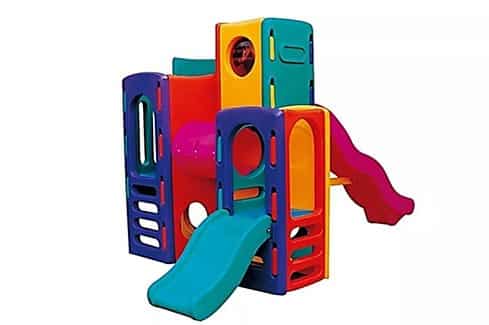
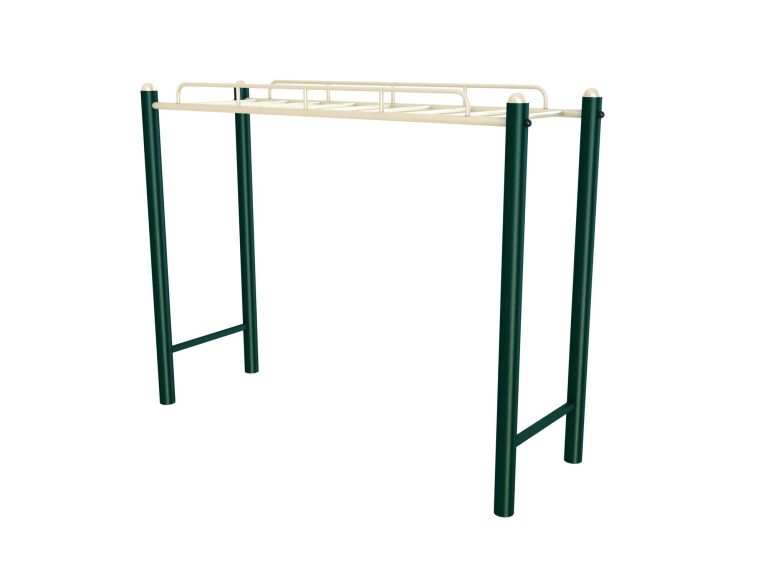
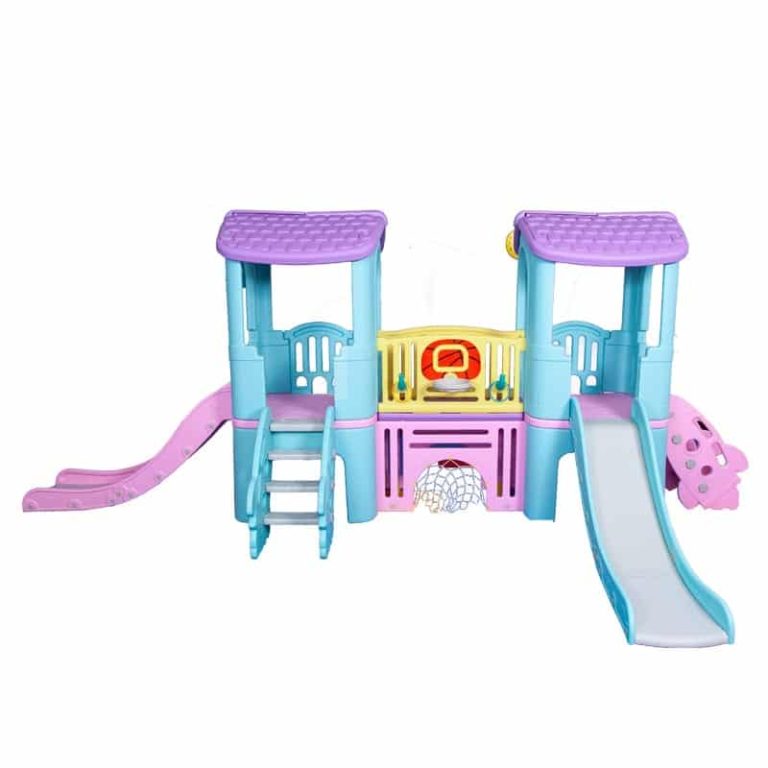
- Climbing: builds grip, balance and coordination. Check for gaps that could trap heads or fingers, enclosed platforms and easy steps. Example to look at: FMJ011 Castle.
- Sliding: builds body control and turn-taking. Check for clear run-out space, smooth joins and whether the top is guarded. Example to look at: FMJ029 Panda Slide.
- Rocking and ride-on: builds balance, core strength and pretend play. Check for a stable base, handholds and spacing between units. Example to look at: FMJ053 Rocking Elephant.
- Swings: gives rhythm and sensory input. Check the seat type and the clear space in front and behind. Example to look at: FMJ022 Carrot Swing.
- Quiet play: builds fine motor and social skills. Check for stable legs, rounded edges and table height for your children. Example to look at: Rectangle Table.
These are examples to view, not a prescription. Confirm the recommended age, heights, safety zone and installation needs of every item with the supplier before you order, and ask whether the table is suited to outdoor use.
Browse the full toddler play equipment range to compare climbers, slides, swings and rockers side by side.
Matching equipment to your age groups
Most creches have babies, toddlers and preschoolers on one property. One climbing frame cannot serve all of them safely, so plan your creche play equipment by group.
Babies and crawlers
They need soft, flat ground, things to pull up on and very low play pieces. Keep their area separate, or schedule their outdoor time when older children are inside.
Toddlers
Toddlers want to climb, rock, push and repeat. Low platforms, short slides, rockers and simple ride-ons keep them busy without big drops.
Preschool to Grade R
Older children need more challenge or they will climb things that were never meant for climbing. Give them a larger climbing unit and open ground, and keep it apart from the toddler zone.
A common mistake is buying for the oldest group only. Count how many children of each age are outside at once and divide your budget to match.
Shade comes first, not last
South African summers make an unshaded yard unusable for much of the day. Plan shade before you place equipment, because shade posts and equipment safety zones must not overlap.
- Map where the sun falls in the morning and afternoon, in summer and winter.
- Put shade over swings, slides, the sandpit and the rest area first.
- In South Africa the sun sits in the northern sky, so slides that face north or west take the hottest afternoon sun. Turn slide beds to face south or east where you can, or shade them.
- Touch slide beds and seats on a hot day before children use them.
- Keep existing trees where you can, and check for low branches and falling pods.
- Place a drinking water point near the shaded rest area.
Surfacing under and around the creche playground
Surfacing is not an extra. Falls are part of play, so the ground under climbing frames, slides and swings needs to soften them.
- Rubber wet pour: a seamless poured surface that suits wheelchairs and pushchairs. Our guide to wet pour flooring explains how it is laid.
- Rubber tiles: laid in sections, so damaged areas can be replaced.
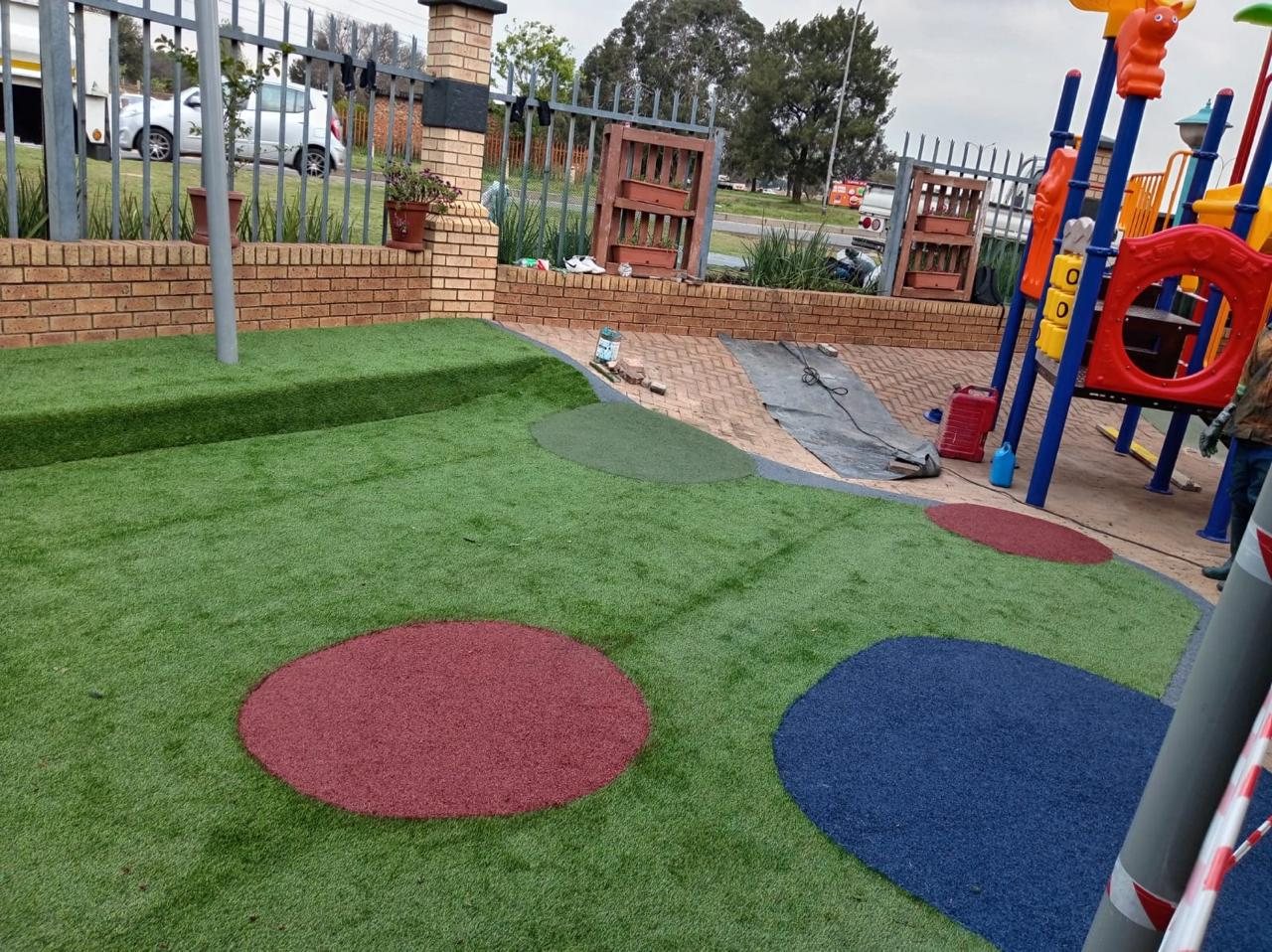
- Artificial grass: looks green all year, but protection depends on the full tested system, so ask whether a shock pad underlay is included and whether the system has been impact tested.
- Sand or bark: only protects when it is kept deep enough for the fall height, so it needs daily raking, topping up and checking for hidden objects.
- Natural lawn: wears bare under swings and slides, and hard dry soil is not a safety surface.
Whatever you choose, suitability depends on impact testing and, for loose fill, on the depth you maintain. Ask for the free fall height of each item, then ask the surfacing supplier for test reports to SANS 51177 that cover at least that height.
The surface must extend past the equipment to cover the full safety zone, not just the area directly underneath. Area, type of surface, site preparation and installation all drive the cost, so get them itemised separately.
The daily safety walk
A short walk before children go outside catches most problems early. Make it one named staff member’s job and keep a simple signed log.
- Check the gate latches and fence for gaps or damage.
- Scan surfacing for glass, sharp objects, animal mess and lifted tile edges.
- Rake sand or bark back under swings and slide exits.
- Shake each unit gently and look for loose bolts, cracks or missing caps.
- Check swing seats, chains and hangers for wear.
- Feel slides and seats for heat.
- Remove standing water and wet leaves.
- Close off anything damaged with tape until it is repaired.
For weekly and seasonal tasks, see our outdoor playground maintenance and safety guide.
Questions to ask your supplier
Use these questions when you compare quotes for creche play equipment. Ask them about every item, not just the biggest one.
- What age range is recommended for this item?
- What is the free fall height of each item?
- What safety zone does each item need, and will my yard fit them all?
- Can you provide test reports to SANS 51176 for the equipment and SANS 51177 for the surfacing?
- Is installation included, and is it itemised on the quote?
- Is site preparation included, or do I need to arrange it?
- Do I need to anchor the equipment, and how?
- Which spare parts can I order later, such as swing seats or chains?
- How should my staff clean and check this item?
How GreenAir can help
GreenAir is based in Johannesburg and works with creches and daycares, schools and private homes. We supply toddler play equipment, slides, swings, rockers, spring riders, daycare furniture and playground safety flooring, including rubber wet pour, rubber tiles and artificial grass.
We install anywhere in South Africa, including Johannesburg, Pretoria, Cape Town, Durban and regional areas. For Zimbabwe, Botswana, Zambia, Namibia and Tanzania we supply and deliver the equipment only, and installation is not included.
We do not publish prices. Send us your yard sketch and child numbers and we will prepare a free, itemised quote, and our design-and-build support can help you plan the zones if you are starting from scratch.
Related reading: Indoor vs Outdoor Jungle Gyms for Toddlers; Outdoor Play Equipment for Grade R: A Practical Setup Guide
Frequently asked questions
What creche playing equipment should I buy first?
Start with surfacing and shade, because they protect every child in every zone. Then add one piece per zone, such as a rocker, a low climber with a slide and a swing, confirming the recommended age of each with your supplier. Add tables and a playhouse for quiet play. Building in stages is fine, as long as you leave room in your plan for later safety zones.
Do I need safety surfacing under toddler equipment?
It depends on the free fall height of each item, but hard ground, paving and dry compacted soil offer no protection, so plan for surfacing by default. Ask your supplier for the free fall height of every item, then choose surfacing with test reports to SANS 51177 that cover at least that height. For sand or bark, the depth you maintain matters, and the surface must cover the full safety zone.
What drives the cost of setting up a creche playground?
The main cost drivers are the number and size of equipment pieces, the type and area of surfacing, site preparation such as levelling or removing paving, shade structures and installation. Access to the site can also matter. Ask for a free, itemised quote so you can see each part separately and phase the project if your budget needs it.
How much outdoor space does each piece of equipment need?
Every item needs its own safety zone, a clear area around it where children may fall or exit. Swings need extra space in front and behind. Ask your supplier for the safety zone of each item, then draw them to scale on your yard plan. Zones should not overlap with each other, with walls, or with shade posts.
Can GreenAir install creche equipment outside South Africa?
GreenAir installs anywhere in South Africa. For Zimbabwe, Botswana, Zambia, Namibia and Tanzania, GreenAir supplies and delivers the equipment only, and installation is not included. If your creche is in one of those countries, plan to appoint a local installer early and ask us before you order what information is available to help them prepare the site.
Planning a play area? Send us your site details and we will prepare a free, itemised quote.