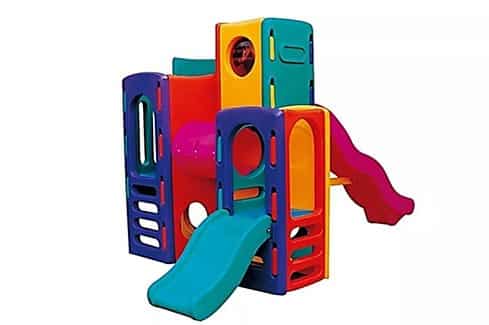
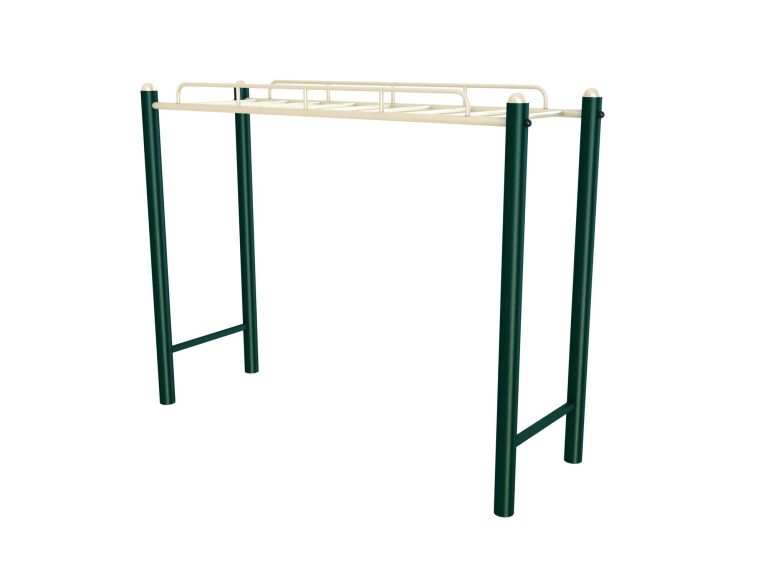
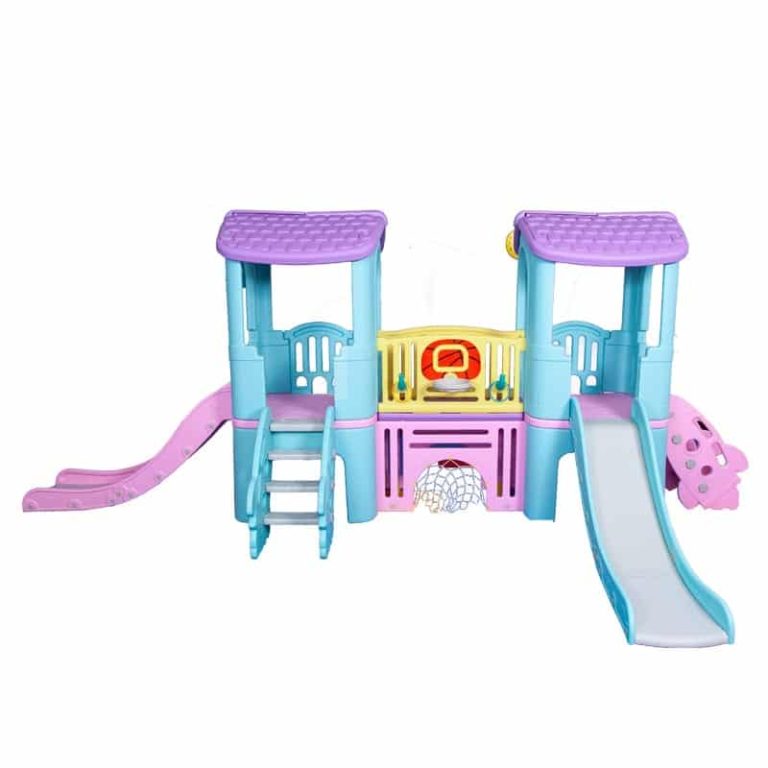
Choosing primary school playground equipment is less about finding the most impressive structure and more about matching play to the children who will use it. A Grade R learner and a Grade 7 learner need very different challenges, yet both may be on the field at the same break.

This guide helps principals and school governing bodies plan by age zone, daily user numbers and supervision sightlines. It then covers surfacing, the questions your SGB should settle first, and the procurement steps that keep a project on track.
Use it as a working document for your next SGB or facilities committee meeting.
Zoning primary school playground equipment by age
A frequent planning mistake is putting every grade on one structure. Older children play faster and rougher, and younger children get knocked off platforms or crowded off slides. Separate zones, with a clear visual or physical break between them, solve much of this before you buy anything.
Grade R
Grade R children need low, contained play with easy access and plenty of activity at ground level. Think short slides, crawl spaces, rockers and spring riders, placed close to the classroom. If Grade R shares a site with a creche or aftercare, keep this zone fenced or clearly separated from the main field.
Setting up the play area of a creche or ECD centre? Use our creche outdoor play area equipment checklist.
Foundation Phase (Grades 1 to 3)
This group wants to climb, slide and chase, but still lacks the judgement and upper body strength of older learners. Look for structures with several routes up and down so a queue does not build at one ladder. Role play panels and connected towers keep a big group busy without everyone fighting over one feature.
Intermediate and Senior Phase (Grades 4 to 7)
Older learners lose interest in equipment they see as babyish, and bored children misuse equipment. They need real challenge: climbing, nets, balance elements and bigger slides, plus open space for ball games.
Planning by age zone
| Zone | Typical play needs | Placement tip |
|---|---|---|
| Grade R | Low climbing, rocking, crawling, short slides | Near the Grade R classroom, fenced or clearly separated |
| Grades 1 to 3 | Climbing, sliding, role play, several access routes | Between classrooms and the field, in a duty teacher’s line of sight |
| Grades 4 to 7 | Challenging climbing, nets, balance, open ball space | Away from younger zones, with a clear buffer |
Always confirm the recommended age range of any structure with the supplier rather than judging from photos.
Capacity: plan school playground equipment for break time
A school playground does not get steady use. It sits quiet for most of the day, then a whole phase arrives at once. Plan for that peak, not for a calm afternoon.
How to estimate your peak load
- Count the learners on the field at each break, by phase.
- Check whether breaks are staggered, or could be.
- Estimate how many children will use equipment rather than sport, games or sitting with friends.
- Ask the supplier whether a recommended number of simultaneous users is given for each structure you shortlist.
- If numbers are high, spread play across several smaller points instead of one centrepiece.
Staggering breaks is often the lowest cost capacity upgrade a school can make. Durability matters for the same reason: school equipment sees far heavier use than a home jungle gym. Ask about wear on slides, steps and fixings, and how replacement parts are ordered.
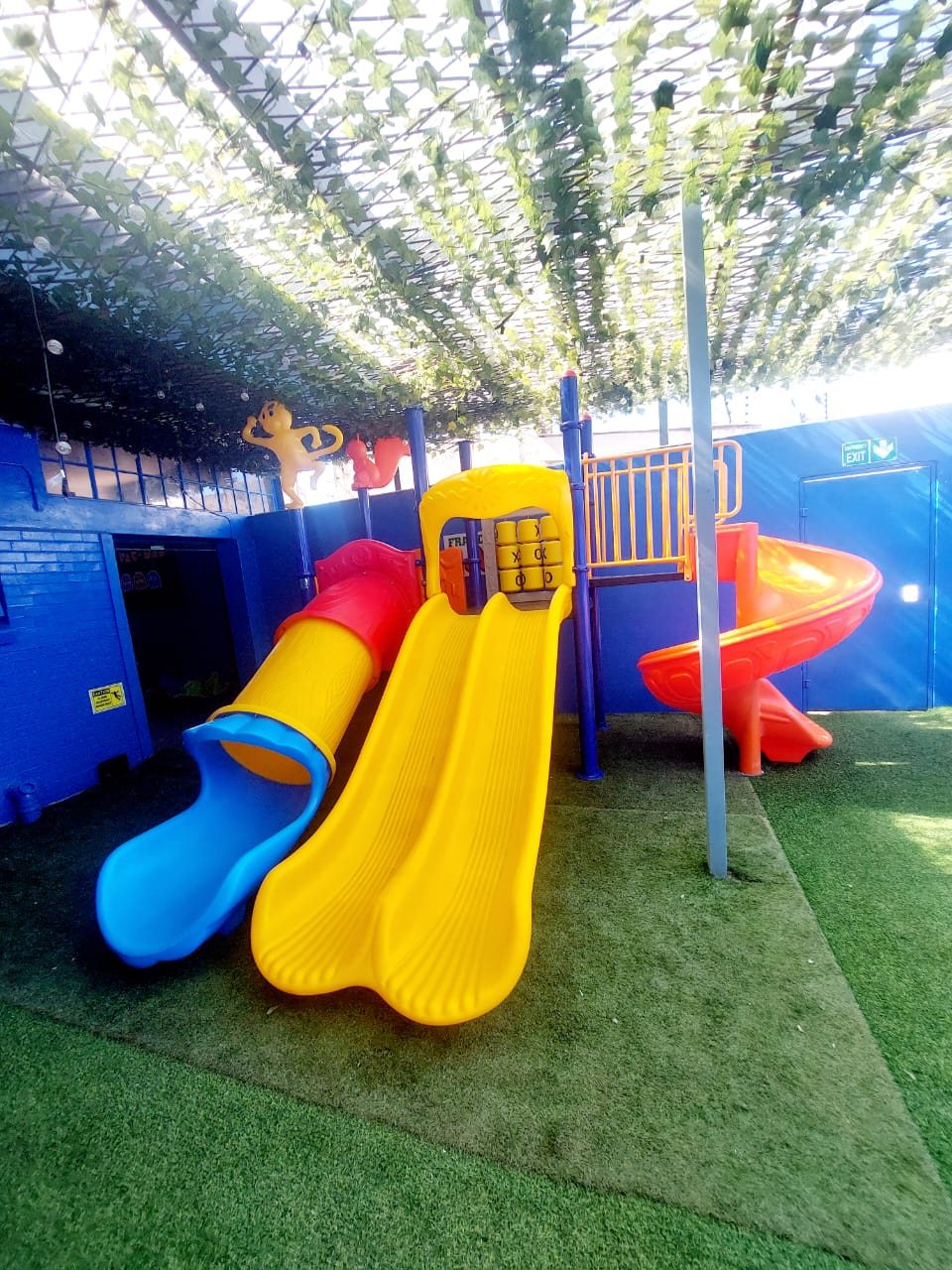
Supervision sightlines, layout and access
Teachers on duty need to see every zone from where they stand. Walk the site with the staff who do playground duty before you settle on a layout.
Layout rules worth following
- Avoid solid panels, tall towers or storerooms that block the view from the duty point.
- Keep a clear walking route around each structure so staff can reach an incident quickly.
- Leave the safety area around each piece free of benches, bins, fences and trees.
- Place play zones away from parking, delivery gates and the school entrance.
- Plan shade and a place to wait out of the afternoon sun.
- Check drainage so the zone does not turn to mud after a summer storm.
Access belongs in this conversation too. Paths, gates and some ground level play should be reachable by learners using wheelchairs or walking aids, and SANS 10400-S is a useful reference for accessible routes and entrances. Our guide to inclusive playground design covers this in more detail.
Surfacing under a jungle gym for schools
Surfacing is where school budgets often go wrong, because it is easy to treat as an extra. Grass and compacted soil quickly wear into hard, bare patches under slides and at ladder bases.
SANS 51177 deals with impact attenuating playground surfacing, and SANS 51176 with the equipment itself. Use them as buyer guidance: ask suppliers for test reports to these standards, and ask whether the surfacing has been tested for the fall height of the equipment you are buying.
Options to compare
- Rubber wet pour: poured in place, suits complex shapes, needs a properly prepared base.
- Rubber tiles: modular, so damaged sections can be replaced.
- Artificial grass: softer look; ask whether an underlay is included and whether the system has been impact tested.
- Loose fill such as bark or sand: needs regular raking and topping up, and can hide litter.
You can compare options in our playground safety flooring range. Site preparation (levelling, excavation, base work and drainage) also drives cost, so ask for these lines to be itemised separately.
Questions for the SGB and your supplier
Settle these questions internally before you request quotes. It saves weeks of back and forth later.
SGB planning checklist
- Which grades will use the new equipment, and which zone is the priority?
- How many learners are on the field at the busiest break?
- Does the budget cover surfacing, site preparation and installation, not only equipment?
- Is funding from fees, fundraising, a sponsor or a provincial allocation, and does that source have its own procurement rules?
- Who will do routine checks and arrange repairs after installation?
- Does the school’s insurer want to see any documentation?
Questions to ask your supplier
- Can you confirm the recommended age range and key heights for each structure?
- Can you provide test reports to SANS 51176 for the equipment and SANS 51177 for the surfacing?
- Is installation included, and who prepares the site?
- Can the quote be itemised line by line?
- Are replacement parts available, and how are they ordered?
- Is there a written guide for owner maintenance?
Procurement steps for a school playground project
- Agree the brief: zones, peak user numbers, priorities and a realistic budget envelope.
- Measure the site and mark services, trees, slopes and drainage problems.
- Shortlist equipment for each zone, including the safety area each item needs.
- Request itemised quotes, in line with the number your finance policy requires.
- Compare like with like: equipment, surfacing, site preparation, delivery and installation.
- Get SGB approval and record the decision in the minutes.
- Schedule installation during a holiday or weekend so the site can be closed safely.
- Walk the finished site with the installer before learners use it, and start a checking routine.
If you are comparing larger structures, browse our outdoor jungle gym equipment. The Giant Jungle Gym HS 08002, the Giant Jungle Gym Set HS 08501 and the Giant Jungle Gym GAI 027 are examples to look at.
Before you commit, confirm the recommended age range, heights and safety area of each one with the supplier. Then check that it fits the zone and peak numbers you planned for.
How GreenAir can help
GreenAir is a Johannesburg based supplier of outdoor play equipment, including plastic jungle gyms, slides, swings, rockers and spring riders. We also supply playground safety flooring in rubber wet pour, rubber tiles and artificial grass.
We serve schools, creches and daycares, and we install anywhere in South Africa, including Johannesburg, Pretoria, Cape Town, Durban and regional areas. For schools in Zimbabwe, Botswana, Zambia, Namibia and Tanzania, we supply and deliver the equipment only; installation there is not included.
We work on free, itemised quotes, so your SGB can see the equipment, surfacing and installation lines separately. For larger playground projects, we also offer design-and-build support.
Frequently asked questions
How much space does a primary school playground need?
There is no single figure, because space depends on the structures you choose and the safety area each one needs around it. Ask the supplier for the safety area of every shortlisted item and whether they can provide a layout drawing for your site. Then add room for walking routes, shade and a buffer between age zones before deciding how much equipment fits.
Can Grade R and senior learners share one jungle gym?
It is better to avoid it. Older learners move faster and play rougher, and younger children are easily pushed off platforms or crowded off slides. If space only allows one structure, stagger break times so phases use it separately, and confirm with the supplier which age range the structure is intended for. Where possible, add a small separate zone for Grade R.
What is the best surfacing under school playground equipment?
The right choice depends on the fall height of your equipment, your budget, drainage and how much upkeep the school can manage. Rubber wet pour, rubber tiles and artificial grass with a suitable underlay are common options, while bark and sand need constant attention. Ask for test reports to SANS 51177 and check whether the surfacing has been tested for your equipment’s fall height.
Who maintains the playground once it is installed?
The school, as owner, is responsible for keeping the playground safe. Set up a simple routine: a quick daily visual check by the groundsman or duty teacher, a more thorough monthly look at fixings, wear and surfacing, and a written log of what was found and fixed. Ask your supplier whether a written maintenance guide is available and how replacement parts are ordered.
What drives the cost of a school playground?
The main drivers are the size and number of structures, the type and area of surfacing, site preparation such as levelling, excavation and drainage, and installation. Site access and distance can also play a role. An itemised quote lets the SGB see each line separately, so you can phase the project or adjust the scope without cutting safety essentials like surfacing.
Planning a play area? Send us your site details and we will prepare a free, itemised quote.