The two main playground safety standards in South Africa are SANS 51176, which deals with playground equipment and how it is inspected, and SANS 51177, which deals with the surfacing under and around that equipment. Both are local adoptions of the European standards EN 1176 and EN 1177, so their content is closely aligned.

For a school, creche, estate or municipal park, the standards are most useful as a shared language. They help you write a clear specification, check what a supplier is offering, and set up an inspection routine you can explain to anyone who asks.
This guide explains each standard in plain terms, shows how buyers use them, and lists the documents to request. It is buyer guidance, not legal advice.
What SANS 51176 covers
SANS 51176 is not one document but a series of parts. Part 1 is the foundation: the rules every piece of playground equipment must follow, whatever its type. The other parts add rules for specific kinds of equipment and for what happens after installation.
The general rules deal with things like gaps where heads, fingers or clothing could be caught, the free space a child needs around equipment, and how strong and stable the structure must be. Test laboratories use tools such as head and neck probes to check openings where a child could get stuck.
| Part | What it deals with | When to ask about it |
|---|---|---|
| Part 1 | General requirements for all equipment | Every purchase |
| Part 2 | Swings | Swing sets and nest swings |
| Part 3 | Slides | Freestanding slides and slides on jungle gyms |
| Part 4 | Cableways | Zip lines in parks |
| Part 5 | Carousels | Roundabouts and spinners |
| Part 6 | Rocking equipment | Rockers and spring riders |
| Part 7 | Installation, inspection, maintenance and operation | Every site, from handover onwards |
| Part 10 | Fully enclosed play equipment | Tunnels and enclosed play units |
| Part 11 | Spatial networks | Climbing nets and rope structures |
South Africa adopted the EN playground standards as local standards in 2010, and some parts have since been revised at different times. Whenever a document refers to a part, check both the part number and the edition year printed on it.
Terms you will see in reports
- Free fall height: the greatest vertical distance from where a child stands, sits or hangs down to the surface below.
- Falling space: the space in, on or around equipment that a falling child could pass through.
- Impact area: the ground a falling child could hit, which needs suitable surfacing.
- Entrapment: any opening or gap where a head, neck, finger, foot or clothing could be caught.
What SANS 51177 covers
SANS 51177 is the local adoption of EN 1177. It sets out how to test a playground surface to measure how well it reduces the impact of a falling head.
This is the point many buyers miss: SANS 51177 is a test method, not a product rating. A surface does not simply pass SANS 51177. It is tested to find its critical fall height in a specific build-up.
What a critical fall height report proves
Critical fall height is the highest fall at which a particular surface, at a particular thickness and build-up, still reduces impact to an acceptable level under the test. In general, thicker installed surfacing is rated for a higher critical fall height.
A report proves only that a tested sample performed that way. It does not prove your surface was laid to the same build-up, so match the report to the highest free fall height above it and ask whether the installed surface can be tested on site.
When surfacing is needed
In broad terms, the equipment standard calls for impact-attenuating surfacing in the impact area where the free fall height is above 600 mm, and under equipment that moves the child, such as swings. Check the current edition for the exact rules and the extent of surfacing required.
Whatever you consider, from rubber wet pour and rubber tiles to artificial grass systems or loose fill, ask for a critical fall height report for the exact build-up being quoted. You can compare surfacing types in the playground safety flooring range, then ask for the test details of the specific option.
How SANS 51176 and SANS 51177 fit together
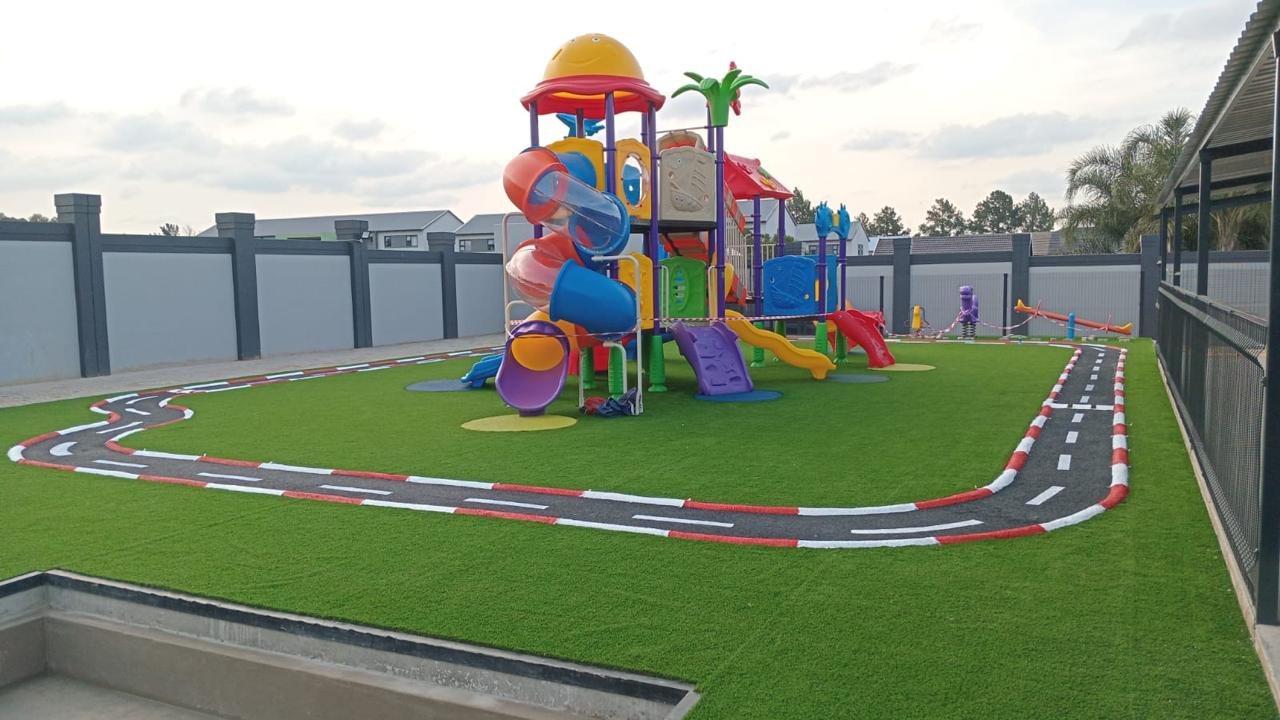
The two standards work as a pair. SANS 51176 tells you how far a child could fall from the equipment and where the impact area lies, while SANS 51177 is how you show the surface in that area can handle that fall.
Neither stands alone. Well-tested equipment over a hard surface is not a sound installation, and nor is excellent surfacing under equipment with entrapment gaps.
What sits outside these two standards
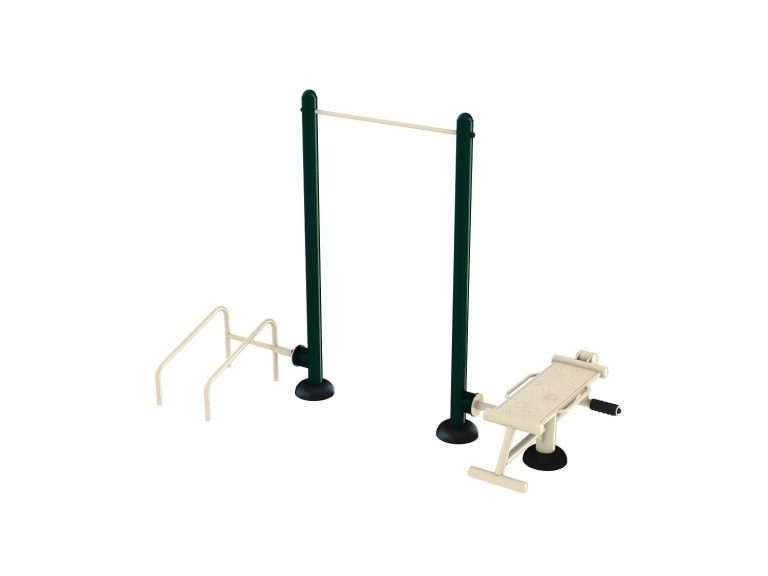
- Outdoor fitness equipment for teens and adults falls under EN 16630, not SANS 51176. If a park or estate has both, specify them separately.
- Supervision is dealt with in a separate South African recommended practice. Ask your adviser whether it is relevant to how you staff the play area.
- Access for people with disabilities to paths, ramps and facilities around the play area, where SANS 10400-S may be relevant.
- Fencing, shade and drainage, which depend on your site plan and local by-laws.
Are playground safety standards in South Africa law?
SANS documents are national standards. Whether one is binding in your situation depends on whether legislation, a by-law, a regulation, a funding condition or a contract refers to it.
We cannot give a legal opinion, so take your own legal advice. Owners and operators are generally expected to take reasonable care of children using their play areas; ask your legal adviser how this applies to you. The Consumer Protection Act deals with the safety of goods and services, and a recognised standard is often used as a practical yardstick when people ask whether reasonable care was taken.
Who is likely to ask about the standards
- SGBs: when approving a school or Grade R play area, and when the school’s insurer asks how it is managed.
- Bodies corporate and HOAs: when trustees answer to residents, managing agents and insurers about shared play areas.
- Municipal parks: SCM tender specifications may name the standards and the evidence bidders must submit.
- ECD centres and creches: when registering with the Department of Social Development, you may be asked about the outdoor area. Ask your local office exactly what they need.
- Hotels and lodges: insurers may ask for equipment documents and inspection records for guest play areas.
Using the standards in a specification
A specification that only says ‘must comply with SANS’ is hard to evaluate. Be specific about what you want to see and how bidders must prove it.
- Name the standards and the parts: SANS 51176 Part 1 plus the parts that match your equipment, and SANS 51177 as the test method for surfacing.
- State the edition you expect, or require bidders to state which edition each test report refers to.
- Ask for the highest free fall height and impact area layout of each item.
- Require a critical fall height report for the exact surfacing build-up quoted, equal to or above the highest free fall height it will sit under.
- Ask who will install, and require a post-installation inspection by a competent person independent of the installer before handover.
- Require a handover pack: as-installed record, maintenance manual and inspection instructions.
- Score documents, not promises: give more weight to reports from a test laboratory than to a self-declaration.
For tender wording and evaluation in more depth, see our guide on how to write a playground equipment tender specification.
Inspections: routine, operational and annual
Part 7 of SANS 51176 describes three tiers of inspection. The equipment instructions should set the exact frequency, and heavy use, vandalism or harsh weather may call for more.
Routine visual inspection
- How often: daily to weekly, depending on use.
- Who: a trained caretaker, teacher or staff member.
- Looks for: broken glass, litter, vandalism, missing parts and displaced loose fill.
Operational inspection
- How often: typically every one to three months.
- Who: trained maintenance staff.
- Looks for: wear, loose fixings, moving parts, stability and surfacing condition.
Annual main inspection
- How often: once a year.
- Who: a competent person with suitable training and experience, such as a specialist playground inspector.
- Looks for: overall safety, foundations, corrosion or decay, and changes since installation.
Keep a written log of every inspection: what was found and what was done. If an item fails, take it out of use until it is repaired.
Local conditions matter. Strong UV and heat can affect plastics and surfacing, coastal air speeds up corrosion of metal fixings, and summer storms can wash out loose fill.
Our outdoor playground maintenance guide has practical checks your staff can use between formal inspections.
Documents to request and questions to ask your supplier
Ask for documents before you sign, not after installation. They are the evidence you will need for insurers, auditors or a tender panel.
Document checklist
- Product test reports for each item against the relevant parts of SANS 51176 or EN 1176, from a test laboratory, naming the exact model.
- The edition year of the standard each report refers to, for example the 2010 edition or a later revision.
- Surfacing test reports to SANS 51177 or EN 1177 showing the critical fall height for the build-up quoted.
- An as-installed record: layout drawing, impact areas, foundation details and surfacing thickness as laid.
- The maintenance manual, with recommended inspection frequencies for each item.
- A post-installation inspection report before the area opens to children.
Questions to ask your supplier
- Do you have test reports for this equipment, and if so, which parts and which edition of SANS 51176 or EN 1176 do they cover?
- Does each report name this exact model, or a similar one?
- Has the surfacing been impact tested, and if so, for which build-up and thickness?
- Is on-site testing of the installed surface possible?
- Is there a recommended age range and a stated free fall height for each item?
- What does the quote include: site preparation, foundations, surfacing and installation?
- Who carries out the post-installation inspection?
Be cautious of a one-line compliance claim with no report behind it. Ask what was tested, by whom, and to which edition.
How GreenAir can help
GreenAir is a Johannesburg-based supplier of outdoor play equipment, including plastic jungle gyms, toddler play equipment, slides, swings, rockers and spring riders. We also supply playground safety flooring in rubber wet pour, rubber tiles and artificial grass.
We work with schools, creches and daycares, residential estates and body corporates, municipalities and parks, and hotels and lodges. We install anywhere in South Africa, and for Zimbabwe, Botswana, Zambia, Namibia and Tanzania we supply and deliver the equipment only, without installation.
Every quote is free and itemised, so you can see how equipment, surfacing, site preparation and installation each contribute to the cost. For larger park and playground projects, we offer design-and-build support.
Products such as the Giant Jungle Gym Set HS 08501 are examples to look at in our outdoor jungle gym range. Use the questions above when you speak to us, and ask for the recommended age, dimensions and any documents you need before you choose.
Related reading: Planning a Community Park: From Site Survey to Handover
Frequently asked questions
What is the difference between SANS 51176 and SANS 51177?
SANS 51176 covers the playground equipment itself: general safety rules, specific types such as swings and slides, and installation, inspection and maintenance. SANS 51177 covers the surface beneath it, setting out how to test impact attenuation and find a surface’s critical fall height. You use them together, because the equipment’s free fall height tells you what the surfacing must be able to handle.
Is grass, sand or concrete acceptable under playground equipment?
Concrete and paving are hard surfaces and are not suitable in an impact area where surfacing is needed. The standards allow some natural surfaces, such as grass or loose fill, in certain situations depending on the free fall height, so check the current edition for details. Loose fill must be topped up and raked to stay effective, and grass wears thin under swings and at slide exits.
Does a creche or school need a playground certificate?
There is no one-size answer, because it depends on who is asking: the Department of Social Development during ECD registration, a municipality, an insurer or a tender panel. Ask them exactly which document they want. Useful evidence usually includes product test reports, surfacing test reports, a post-installation inspection and an inspection log. Be wary of a general certificate that does not say what was tested, and take legal advice where needed.
What are the four components of playground safety?
A common way to frame it is supervision, age-appropriate design, suitable fall surfacing and equipment maintenance. These line up loosely with the standards: SANS 51176 deals with safe equipment design, inspection and maintenance, SANS 51177 with surfacing, and supervision with a separate recommended practice and your own staff rules. Matching equipment to the children’s ages is a choice to make with your supplier.
Planning a project? Send us your site details and we will prepare a free, itemised quote.