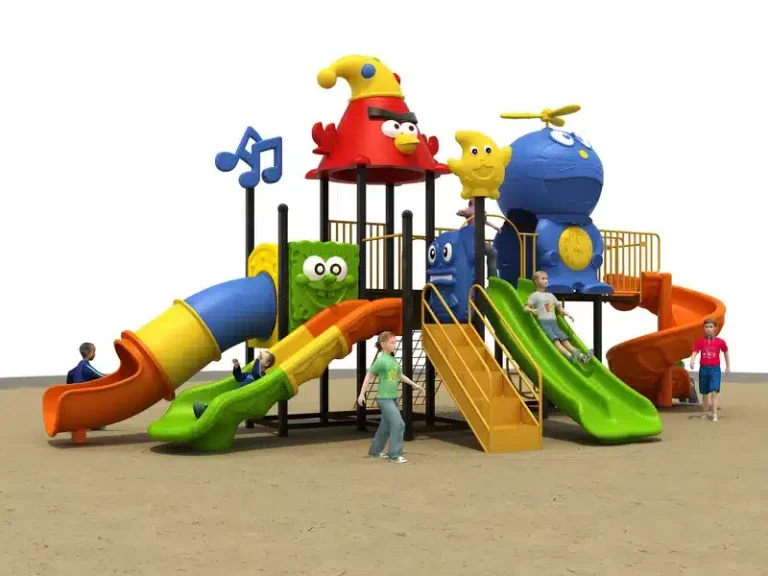
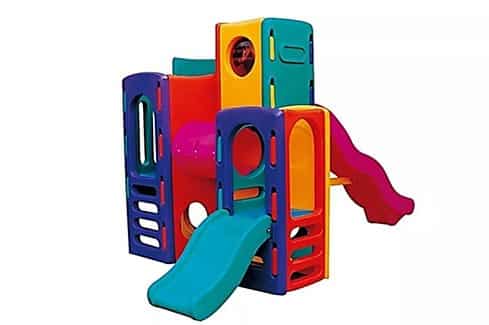
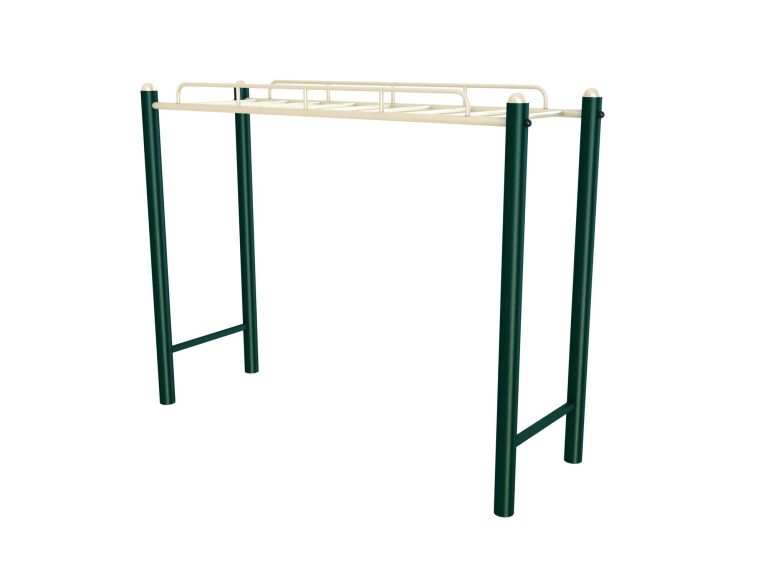
A good playground equipment tender specification tells bidders what you need, where it goes and how you will judge their offers, without locking you into one product. Get it right and you can compare quotes line by line. Get it wrong and you end up comparing a single swing set with a full play system on price alone.

This guide is for parks officials, school governing bodies, developers and body corporates preparing a playground tender or an RFQ for playground equipment. It covers structure, functional versus product requirements, surfacing, documents and fair scoring.
Procurement rules change and differ between organisations, so confirm current requirements with your own procurement or finance office before you issue anything.
What goes into a playground equipment tender specification
Think of the specification as a brief that any competent bidder could price without phoning you. Cover these points:
- Description: what you are buying and why, such as a new park play area or replacement of damaged units.
- Site: address, access, ground conditions, slope, services, shade, and whether it is coastal.
- Users: age ranges, and whether the space is supervised or open to the public.
- Scope: supply only or supply and install, plus removals, site preparation, surfacing and fencing.
- Quantities: units, square metres of surfacing and metres of edging, set out in a bill of quantities.
- Programme: completion date, working hours and restrictions such as school terms.
- Submission and evaluation: what bidders must submit and how you will score them.
Supply only, supply and install, or repairs
Be explicit about who installs. With supply only, you or another contractor installs and you carry the risk if it goes wrong. Supply and install puts delivery, foundations, assembly and making good in one contract.
Repairs and replacement parts are a different job from new equipment. Give them their own BOQ section so repair work does not blur the price of new equipment.
Structuring the bill of quantities
A bill of quantities (BOQ) lets you compare bids line by line. Keep preliminary and general items apart from equipment, so you can see what each bidder charges for being on site versus what they supply.
| BOQ section | Example items | Why separate it |
|---|---|---|
| Preliminary and general | Site establishment, safety file, insurance, supervision | Fixed costs that do not change with equipment choice |
| Equipment supply | Each play unit, swing or spring rider on its own line | Compare like with like, and drop items if the budget is tight |
| Installation | Setting out, footings, assembly, fixings | Installation costs can differ widely between bidders |
| Surfacing and site works | Excavation, sub-base, surfacing per square metre, edging, drainage | Often a large part of the job and easy to under-scope |
| Removal and repairs | Old units, replacement parts, refurbishment | Keeps repairs out of the new equipment price |
Functional versus product specifications
A product specification names a model, or describes it so precisely that only one product fits. A functional specification describes what the equipment must do, who it is for and what evidence you need, and leaves the design to bidders.
| Functional specification | Product specification | |
|---|---|---|
| Best for | New play areas, public open spaces, design-and-build projects | Matching existing equipment, like-for-like replacement, spare parts |
| What you describe | User ages, activities, number of users, site, standards evidence | Model, layout and components |
| Competition | Wide, because bidders propose different designs | Narrow, unless you allow equivalents |
| Evaluation effort | Higher, because you must score designs | Lower, mostly price and documents |
For most new playgrounds, a functional specification gets better value because bidders compete on design as well as price. Use a product specification when consistency matters, such as adding to an existing play area or ordering parts.
Use the ‘or equivalent’ clause properly
Wherever you name a product or design as a reference, add ‘or equivalent’ and define it: the same play functions, similar or greater play value, the same intended age range and the same standards evidence. Ask bidders offering an equivalent for drawings and data sheets so you can judge it.
Public bodies are generally expected to avoid specifications that favour one supplier, so check the wording with your procurement office.
Heavy duty versus domestic equipment
‘Heavy duty’ appears in many tenders but is rarely defined, so it cannot be scored. What separates public-use equipment from domestic equipment is how it will be used and the evidence behind it.
- Unsupervised use: public equipment must cope with rough use and misuse when no adult is watching. Home garden sets assume a parent nearby.
- User numbers: a park or school unit carries many children at once, every day. Describe expected use so bidders can respond.
- Anchoring: public equipment is normally fixed in foundations designed for the site. Ask bidders to describe theirs.
- Standards evidence: ask for conformity to SANS 51176 (or EN 1176) backed by test reports. Domestic products are generally not designed for public use.
So instead of ‘heavy duty’, write ‘equipment intended for public, unsupervised use, anchored to suit the site, with test evidence to SANS 51176’. Treat ‘as per safety specification’ and ‘durable’ the same way: name the standard, the evidence and the site conditions instead.
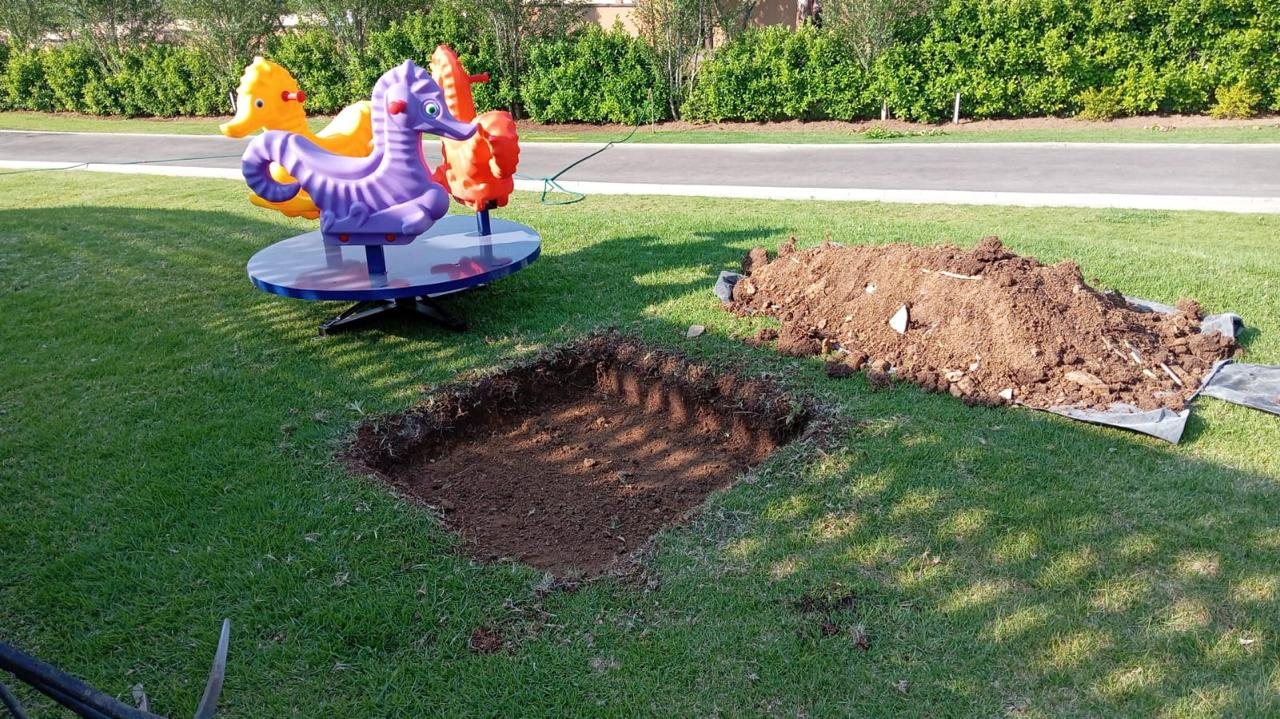
Surfacing, fall heights and safety zones
Surfacing is where many playground tenders go wrong. The equipment is described in detail, then the BOQ says ‘safety flooring’ with no area, build-up or test requirement.
What to specify
- The free height of fall for each item, stated by bidders.
- Impact-absorbing surfacing across the full impact area, tested to SANS 51177 (or EN 1177), with a critical fall height at least equal to the free height of fall above it.
- Safety zones for each item drawn on the layout, in line with SANS 51176, clear of paths, fences and each other.
- Sub-base, drainage and edging, specified by you or proposed and priced by bidders.
- Who removes existing surfaces, rubble and soil, and where it goes.
Common options include rubber wet pour, rubber tiles and artificial grass over a suitable underlay. Each behaves differently in heat, rain and heavy traffic, so ask bidders to justify their choice. Browsing a range of playground safety flooring helps you understand the types before you write the surfacing lines.
Coastal and inland sites
Salt air in coastal towns such as Durban, Cape Town and Gqeberha attacks steel, chains and fixings faster than inland air. If your site is coastal, say so and ask for the material, corrosion protection and finish of frames, chains and fixings.
Inland sites face strong UV, hail and big temperature swings. Ask how materials respond to sun exposure and whether shade over slides and platforms is advised.
Documents to request from bidders
Documents let you check claims before you award, not after the equipment arrives. Ask for:
- A scaled layout showing each item, safety zones, surfacing and paths.
- Data sheets with dimensions, materials, intended age range and free height of fall.
- A statement of conformity to SANS 51176 and SANS 51177, with test reports and the issuing body named.
- An installation method statement, including foundations and site security.
- Health and safety documents and proof of public liability insurance.
- Maintenance instructions, an inspection schedule and a spare parts list.
- Contactable references for similar sites.
- Warranty terms in writing.
Compulsory returnable forms
Public bodies usually require standard bidding forms: SBD forms for national and provincial departments and MBD forms for municipalities. These typically include a declaration of interest, a declaration of past supply chain practices and a preference points claim form.
Bidders are normally asked for a Central Supplier Database (CSD) number and a B-BBEE certificate or sworn affidavit. Some bids also need a local content declaration; your procurement office will know whether it applies.
Preference points are generally scored under the 80/20 or 90/10 system, with most points for price and the rest for specific goals set by the organ of state. Which applies depends on bid value and your policy, so confirm it rather than copying clauses from old tenders that may cite outdated regulations.
Instructions bidders need
- Closing date, time and how to submit.
- Whether a briefing session or site visit is compulsory.
- A quote validity period long enough for your approvals.
- A contact person and a cut-off date for questions.
- A fixed BOQ format that every bidder completes.
Evaluation criteria beyond price
When designs differ, price alone will not show you the best bid. A functionality stage, scored before price and preference points, screens out weak proposals first.
Publish a functionality threshold (the minimum score a bid needs to proceed) and the weight of each criterion. You could score:
- Play value and layout: range of activities, flow, supervision sight lines and inclusion, with SANS 10400-S in mind for accessible routes.
- Drawings: complete, scaled and specific to your site.
- Standards evidence: test reports, not just a statement.
- Method statement: realistic, safe and suited to your site rules.
- Experience: similar sites and contactable referees.
- Handover information: manuals, inspection guidance and spares information.
Score with a panel using one scoresheet, and record the reason for each score.
Comparing quotes when designs differ
Insist that every bidder prices against the same BOQ, then compare by function: number of play activities, area of surfacing and what is included. A bid that leaves out surfacing, foundations or rubble removal is incomplete, not cheaper.
Installation, inspection and maintenance
A playground is not finished when the last bolt goes in. Write the handover into the specification: as-built layout, maintenance manuals, spare parts list and a site walk-through with the people who will look after it.
Who installs, who certifies, who maintains
- Installs: the appointed bidder under supply and install, or your own contractor under supply only.
- Supplies test evidence: bidders, who submit test reports for equipment and surfacing with their bid.
- Inspects the finished site: an independent, competent inspector appointed by you, the owner, not by the bidder. They check the installation against SANS 51176 and SANS 51177 before it opens.
- Maintains: the owner, through routine visual checks, periodic operational checks and a detailed main inspection, in-house or by a contractor.
Budget for the independent inspection and ongoing checks. If you want a contractor to maintain the site, price it as a separate optional item so it does not distort the equipment comparison. Our outdoor playground maintenance and safety guide sets out what owners should check.
A simpler RFQ for schools, creches and estates
A school governing body, ECD centre, body corporate, HOA or lodge usually does not need a full public tender. Check your finance policy or conduct rules, which may require a set number of written quotes and a committee decision.
A one or two page RFQ is enough if it covers:
- Site address, photos and a measured sketch.
- Ages of the children and how many use the area at once.
- Activities you want and must-haves, such as a separate toddler area.
- Supply only or supply and install, and who removes old equipment.
- Surfacing to include, in square metres.
- The documents listed above, or at least a layout, data sheets and test reports.
- An itemised price schedule, closing date and validity period.
Questions to ask your supplier
- Can you draw the safety zones and surfacing on a plan of our site?
- Has the surfacing been impact tested, and is an underlay included?
- Is site preparation included or priced separately?
- What do you need from us during installation, such as access or water?
- How are spare parts ordered after handover?
How GreenAir can help
GreenAir is based in Johannesburg and supplies outdoor play equipment, outdoor fitness equipment, playground safety flooring (rubber wet pour, rubber tiles and artificial grass), daycare furniture, outdoor domes and dog park equipment. We work with schools, creches and daycares, residential estates and body corporates, municipalities and parks, and hotels and lodges.
We provide free, itemised quotes, which are easy to line up against your bill of quantities. We install anywhere in South Africa; for Zimbabwe, Botswana, Zambia, Namibia and Tanzania we supply and deliver the equipment only, without installation.
For larger sites, our design-and-build support for park and playground projects can help turn a functional brief into a layout. You can also browse our outdoor jungle gym equipment for reference examples.
The Giant Jungle Gym HS 01102 and the Giant Jungle Gym HS DF 1351 are examples to look at. Ask for the recommended age range, dimensions and supporting documents before you use either as a reference in a specification.
Frequently asked questions
What is the difference between an RFQ and a full tender for playground equipment?
An RFQ is a simpler request for written quotes, usually used for smaller or less complex purchases and often sent to selected suppliers. A full tender is formally advertised, may include a compulsory briefing session, and has stricter forms, evaluation and adjudication steps. The value limits for each route depend on your organisation’s supply chain policy, so ask your procurement or finance office which one applies.
Which standards should a South African playground specification refer to?
Ask bidders to state conformity with SANS 51176 for playground equipment and SANS 51177 for impact attenuating surfacing, backed by test reports. These correspond to EN 1176 and EN 1177. SANS 10400-S is relevant for accessible routes, and outdoor gym stations fall under EN 16630. Check with your advisers whether conformity is mandatory for your project or a requirement you choose to set.
Can the installer inspect its own work before handover?
The installer should check its own work and hand over the documents you asked for, but that is not an independent inspection. Bidders provide test evidence for their products; the owner should appoint a separate, competent inspector to check the finished site before it opens. Keeping the roles apart avoids a conflict of interest and gives you a clear record if problems appear later.
Can we put play and outdoor fitness equipment in the same tender?
Yes, but give each its own BOQ section and functionality criteria. Outdoor fitness stations serve different users and are covered by a different standard, EN 16630, so ask for evidence against it separately. Splitting the sections also lets you award to different bidders if one is stronger on play and another on fitness, provided your bid conditions allow split awards.
Planning a project? Send us your site details and we will prepare a free, itemised quote.