Dog agility equipment for a shared park is not the same as a competition course or a backyard kit. An estate, a training club or a municipal dog park needs obstacles that untrained dogs and their owners can use safely without an instructor standing by.

This guide covers the common obstacle types, a sensible beginner set, how to lay out the course, which surfaces cope with Highveld winters and summer storms, and which welfare rules belong on the sign at the gate.
It is written for body corporates, estate managers, trainers and parks officials who need to plan, get approval and often buy in phases.
Common types of dog agility equipment
Most dog obstacle course equipment falls into a handful of families. Knowing what each one asks of a dog helps you decide what belongs in an unsupervised community park and what is better kept for a trainer’s class.
Jumps
Bar jumps, or hurdles, are the simplest obstacle: a bar between two uprights. In a public park, low bars that fall away if a dog clips them are kinder than fixed bars. A tyre jump or hoop jump asks the dog to leap through an opening, while a broad jump asks it to stretch over a low, wide spread rather than go up.
Weave poles
Weave poles are a row of upright poles that the dog slaloms through. Proper weaving is a trained skill, so in a community park most owners will simply walk their dogs through on lead. That is fine, and it still builds focus.
Tunnels
In a shared park, keep tunnels short, straight and open so owners can see right through. Long or curved fabric tunnels belong in supervised training, where someone can stop two dogs meeting inside.
Pause table
A pause table is a low platform where the dog stops, sits or lies down. It teaches control and gives excited dogs a moment to settle, which is useful in a busy park.
Contact obstacles
Contact obstacles are the ones a dog walks over: the dogwalk (a raised plank), the A-frame, the teeter or seesaw, ramps and hills. Painted contact zones at each end mark the area the dog should touch with its feet when getting on and off. Because they involve height and movement, add them once dogs and owners are confident.
Steppers
Steppers are a series of low platforms the dog steps across. They build body awareness and suit cautious dogs, as long as the gaps and heights are matched to the dogs using them.
A beginner-friendly set, and what to add later
Trainers usually start with jumps, a tunnel and weaves, then add contact obstacles. The same principle works for a community park: begin with obstacles a nervous dog can succeed on the first time.
Phase one: the starter set
- Two or three low jumps that dogs can also step over
- A short, straight tunnel with a clear view through it
- A set of weave poles, or channel weaves that open out for beginners (in an unsupervised park, channel weaves or walking dogs through on lead is the realistic option)
- A pause table or low platform for settling
- Low steppers or a gentle ramp
Phase two: confidence and contacts
Once the park is in regular use, add a dogwalk, A-frame or teeter, plus a tyre or hoop jump. Watch how dogs use phase one first. Worn patches and ignored obstacles tell you a lot about where the next pieces should go.
Beginner and advanced zones
If space allows, separate a beginner zone of low, wide, stable obstacles from an advanced zone with height and moving parts. Clear signage stops an enthusiastic owner sending a puppy up an A-frame.
Portable kits or fixed dog park equipment?
Trainers usually want portable kits they can pack away after class. Estates and municipalities usually need fixed equipment that stays put and does not disappear overnight.
| Factor | Portable kit | Fixed park equipment |
|---|---|---|
| Suited to | Trainers, clubs, home gardens | Estates, public parks, lodges |
| Mowing | Pieces lift out so grass can be cut | Mow and trim around footings; plan mowing strips |
| Security | Must be stored or locked away | Anchored on site, harder to remove |
| Layout changes | Easy to rearrange for each class | Layout is set at installation |
| Unsupervised use | Can shift or tip if not pegged down | Stays where it was installed |
You can also combine the two. Fix the hills, steppers and contacts, and keep a few light jumps or weaves that a caretaker or club can move for mowing or classes.
Laying out a dog obstacle course
Fencing, gates and zones
Fence the whole off-leash area and use a double-gated entry, so one gate closes before the next opens. Where you can, create a separate small-dog area with its own entrance, so small and timid dogs are not bowled over by large ones.
How much space you need
There is no single right size, so build the footprint up from the equipment. Start with the supplier’s dimensions for each item, then add a clear run-up and landing on both sides of every obstacle.
On top of that, allow room for a loop route between obstacles, a walkway for owners around the outside, a separate small-dog area and open space around the water point. Sketch it all on a site plan before you order, so you can check that both the starter set and later phases will fit.
Spacing and flow
Give each obstacle a run-up and landing of several strides, and keep the owners’ walkway outside the dogs’ route. Arrange obstacles in a loose loop so dogs flow from one to the next instead of doubling back into each other.
Keep jumps well away from fences, trees, benches and gates. A dog that overshoots needs room to land and turn.
Water, shade and amenities
Put the water point away from the obstacles, because the ground around it gets wet, muddy and crowded. Place obstacles in or near shade, and put seating where owners can see the whole course.
- Drinking water with a drain or soakaway
- Waste bag dispensers and lidded bins at the gates and along the walkway
- Shaded benches with a view of the course
- A wash station or hose point near the exit
- A rules sign at the entrance
Surfaces for South African conditions
The surface under and between the obstacles matters as much as the equipment. On the Highveld, winter ground can be rock hard and dry, while summer storms turn bare patches into mud. Coastal parks deal with sand, humidity and heavy rain instead.
- Natural grass: kind to joints and cool underfoot, but wears into dust or mud at take-off and landing points. Plan for reseeding and rest periods.
- Sand or fine mulch: drains well and softens landings, but needs raking, topping up and checking for buried waste.
- Artificial grass: stays even year round, but heats up in sun and needs good drainage and regular rinsing where dogs urinate.
- Rubber surfacing: firm and even, but gets hot in direct sun and needs regular cleaning. Ask how it copes with urine and claw wear.
For background on rubber surfacing, see our guide to wet pour flooring for playgrounds, keeping in mind that dog use has different needs: urine, claws, hosing down and paw-pad heat matter more than they do under a jungle gym.
Whatever you choose, sort out drainage before installation. A course that floods after every storm stays closed for days, and standing water around footings is hard on any equipment.
Heat
Steel and rubber get hot in direct summer sun, hot enough to hurt paw pads. Shade the obstacles dogs walk on and encourage use in the morning and evening. Teach owners the back-of-hand test: if a surface is too hot for your hand, it is too hot for paws.
Dog welfare, supervision and park rules
Warm up and match the dog
Walk dogs around the park before any jumping, and finish with a calm cool-down. Older dogs, heavy breeds and dogs with joint problems should stick to low obstacles, steppers and walking work, after a check with their vet.
Never ask a puppy to jump at full height, because growing joints are vulnerable. Many trainers wait until a dog is fully grown before raising bars, and large breeds mature later, so ask your vet.
Heat stress and fear
Stop if a dog pants heavily, slows down, lies down or keeps looking for shade. Signs of fear include a tucked tail, lip licking, freezing, backing away or refusing an obstacle. Never lift or force a dog onto equipment.
Rules for the gate sign
- One dog per obstacle at a time
- Owners supervise their dogs at all times
- Dogs on lead through the double gate
- Pick up and bin all waste
- No full-height jumps or high obstacles for puppies
- Children may not climb or play on the dog equipment
- Stay away if your dog is unwell, in season or reactive
Checks are a duty of care
Whoever owns the park carries the duty of care. Agree on a simple routine of visual checks for loose bolts, cracks, sharp edges, worn grip and damaged surfacing, plus regular cleaning and waste removal. Close any damaged obstacle until it is repaired, and keep a short log of checks and repairs.
Planning checklist for estates, trainers and municipalities
In an estate, the trustees or HOA board normally approve the site, budget and conduct rules, and residents near the park may want a say on noise and parking. Municipal projects run through the parks department, often with input from the ward councillor and a friends-of park group.
If the project goes out to tender, our guide on how to write an equipment tender specification shows how to describe what you need clearly.
- Choose a site with shade, drainage, parking and some distance from homes.
- Agree who will own, clean and check the equipment once it is installed.
- Decide on fixed, portable or mixed equipment.
- Plan fencing, double gates, a small-dog area and the water point.
- Draw a site plan using item dimensions plus run-up, landing and walkway space.
- Choose a surface and solve drainage first.
- Phase the budget: fencing, water and the starter set first, contact obstacles later.
- Draft the conduct rules and the gate sign.
- Request itemised quotes covering equipment, delivery, installation and surfacing.
Questions to ask your supplier
- How is each obstacle fixed to the ground, and does it need concrete footings?
- What is the footprint of each item, and is there guidance on run-up and landing space?
- What are the walking surfaces made of, and is the finish textured or non-slip?
- Can jump heights be changed, and if so, how?
- Is installation included, and what site preparation must we do before installation?
- Is written care and checking guidance provided for each item?
- Is the quote itemised so we can phase the purchase?
How GreenAir can help
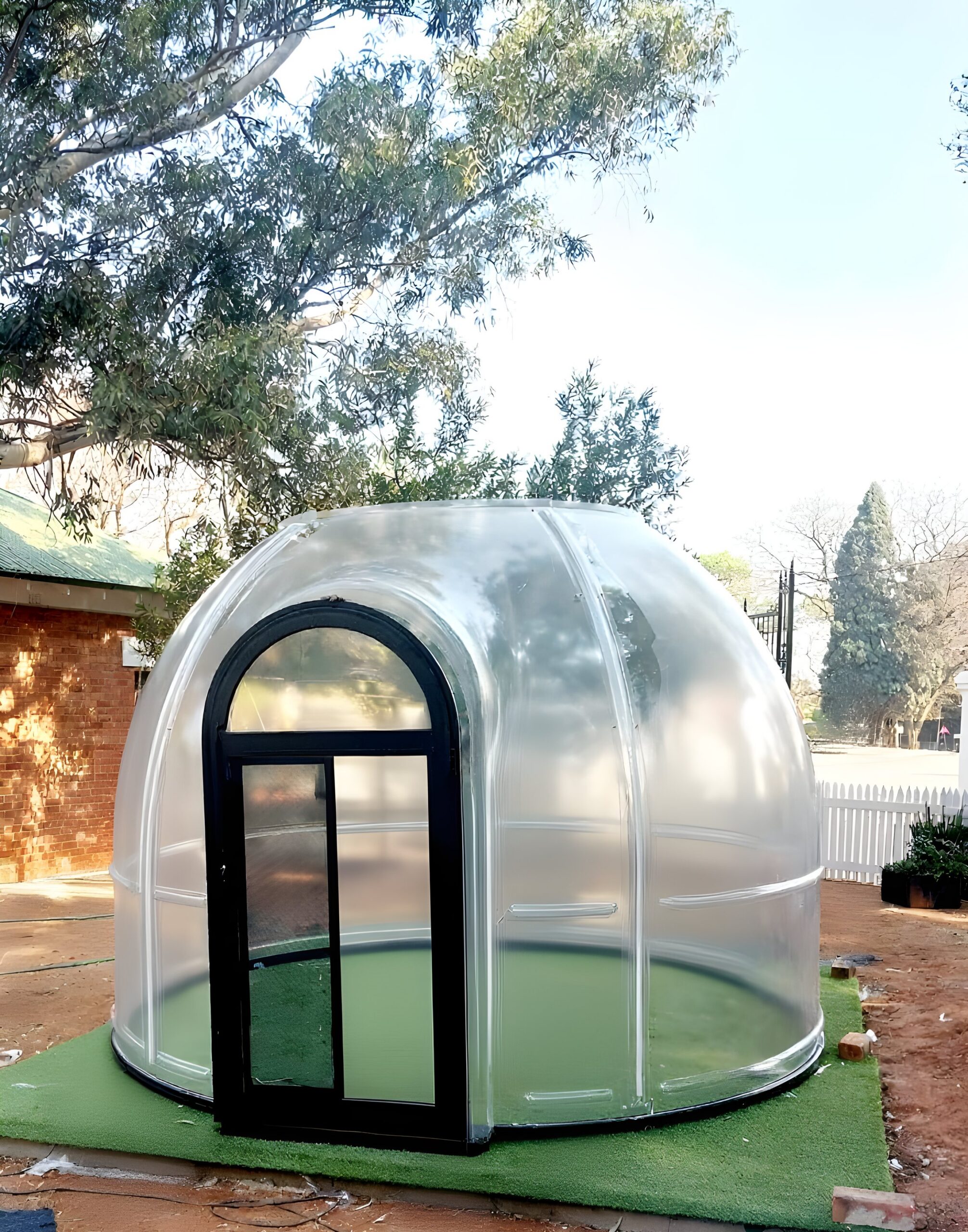
GreenAir is based in Johannesburg and supplies dog park equipment alongside outdoor play equipment, outdoor fitness equipment, playground safety flooring and outdoor domes. You can browse our dog park equipment range to see the obstacle types available.
Products such as the Dog Hill Climb, Dog Hoop Jump, Spiral Dog Steppers and Adjustable Jump Hurdle are examples to look at. Ask for dimensions, fixing details and any guidance on dog size before you choose.
We install anywhere in South Africa, including Johannesburg, Pretoria, Cape Town, Durban and regional areas. For Zimbabwe, Botswana, Zambia, Namibia and Tanzania we supply and deliver the equipment only; installation is not included.
We also supply rubber wet pour, rubber tiles and artificial grass, so ask about suitability for dog use, drainage and cleaning before you decide. Estates, municipalities and lodges planning a larger park can use our design-and-build support for park projects, and every quote is free and itemised, which makes phasing easier.
Frequently asked questions
What dog agility equipment should we buy first?
Start with a few low jumps, a short straight tunnel, a set of weave poles and a pause table or low steppers. These let untrained dogs succeed quickly and show owners how the course works. Add contact obstacles such as a dogwalk, A-frame or teeter in a later phase, once you have seen how the park is used and where dogs naturally flow.
At what age can a puppy start agility, and when can it jump at full height?
Puppies can start with gentle foundation work: walking over poles on the ground, short open tunnels and settling on a pause table, in short and fun sessions. Full-height jumping, weaves and high contact obstacles should wait until the dog is fully grown. Large breeds usually mature later than small ones, so ask your vet to confirm when your dog’s joints are ready.
Which surface is best for a dog agility area: grass, sand or rubber?
Well-kept grass is kind to joints and stays cooler, but wears at take-off and landing points. Sand drains well but needs raking and cleaning. Rubber and artificial grass stay even year round but heat up in direct sun and need regular rinsing. Many parks combine surfaces, with a harder-wearing option in high-traffic spots. Whatever you pick, solve drainage first.
Can I set up a dog obstacle course in my garden?
Yes, a small home course works well for training. A few low jumps and a short tunnel fit into many gardens if you leave room for a run-up and landing, but measure first, because weaves and their run-up space may not fit a small townhouse or cluster garden. Choose level ground away from walls, paving edges and pool fences, and keep sessions short and early in summer heat.
Is agility safe for older, small or large dogs?
It can be, if the obstacles match the dog. Older dogs and dogs with joint problems do well on low steppers, low ramps and walking work, after a vet check. Small dogs need lower jumps and smaller gaps, while large dogs need more room to take off and land. Stop at any sign of stiffness, limping, heavy panting or reluctance.
Planning a dog park or outdoor space? Send us your site details and we will prepare a free, itemised quote.