A big jungle gym in a park, estate or public open space has a harder job than one in a back garden. It must handle many children at once, a wide mix of ages and abilities, heavy use with little supervision, and constant exposure to sun, hail and rain.

This guide explains what changes when play equipment serves the public: planning for capacity, asking the right vandal resistance questions, getting surfacing and access right, and phasing the budget so the project actually gets finished.
It is written for parks officials, estate managers and body corporates who need a decision they can defend at a council or trustee meeting.
Who really uses a public play space
Before you look at any equipment, picture the people who arrive on a Saturday morning. In a public park or a large estate, the users are far more varied than a catalogue suggests.
- Toddlers with caregivers, who need low, contained play away from faster older children.
- Primary school children, the main users of a large multi-play unit, often arriving in groups after school.
- Older children and teenagers, who will climb on equipment not meant for them if nothing else is available.
- Parents, grandparents and nannies, who need seating, shade and clear sight lines.
- Children and adults with disabilities, who need a way to reach the play area and something to do once there.
Use is also uneven. Estates get busy in school holidays and municipal parks peak on weekends, so a unit that feels spacious on a Tuesday can be overcrowded on a Sunday. Visit the site at peak times and note who you see.
Choosing a big jungle gym for public use
Play value, not just size
A giant jungle gym is only worth the space if it offers real variety: climbing, sliding, crawling, balancing and places where children can simply sit together. Count the ways on and off the unit, because several entry and exit points spread the crowd and stop queues at a single ladder.
Capacity and age zones
Ask the supplier how many children a unit is designed to hold at once and compare that with your peak day visit. If demand is clearly higher, two units in separate zones can work better than one very large structure.
Plan separate zones for toddlers and older children. Confirm the recommended age range of every unit with the supplier rather than guessing from photographs.
Examples to compare
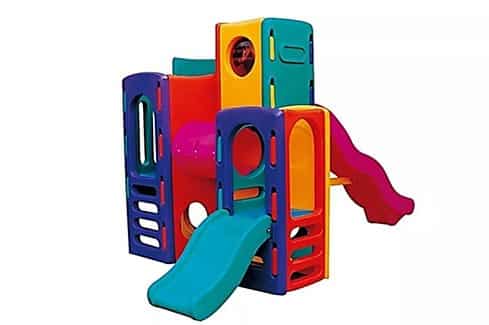
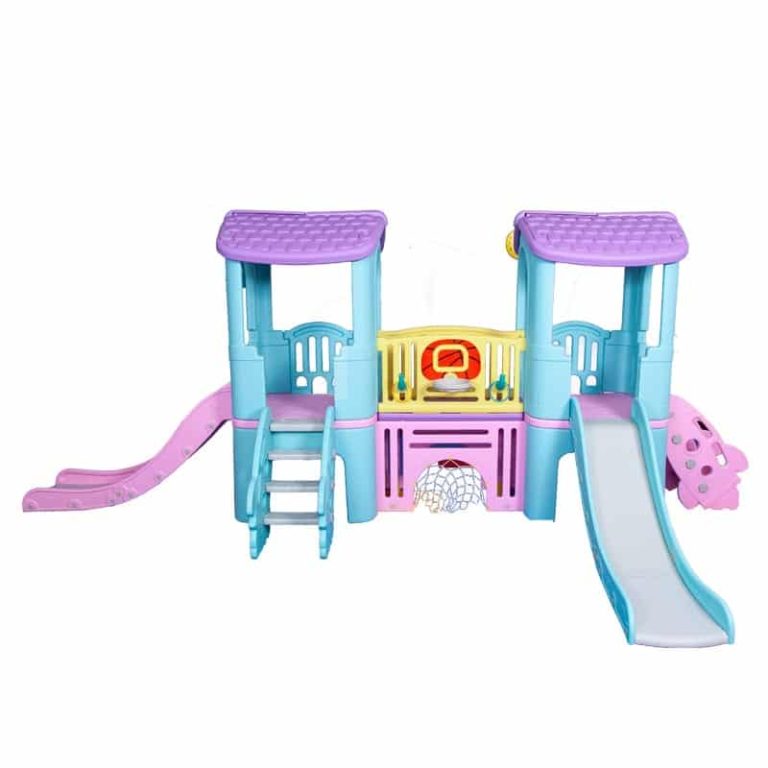
When you browse the outdoor jungle gym equipment range, units such as the Giant Jungle Gym HS YB D7, the Giant Jungle Gym HS 08002 and the Giant Jungle Gym GAI 027 are examples you could look at. Before shortlisting, confirm the recommended age range, heights, footprint and user capacity with the supplier.

Vandal resistance: questions to ask, not promises to accept
No equipment is immune to determined misuse, so be cautious of vague claims. What you want are clear answers about how a unit is put together and how easily it can be repaired.
- Ask whether the fixings are tamper resistant and whether special tools are needed to remove them.
- Ask whether individual components can be ordered as spare parts.
- Ask what materials are used and, if plastic, whether it is UV stabilised and how it is expected to weather in strong sun.
- Ask how the unit is fixed to the ground and whether the footing design suits your soil.
Site design matters as much as equipment. A play area near a busy path, in view of houses or a guardhouse, tends to see less damage than one hidden at the back of a park.
Fencing and self-closing gates keep dogs and bicycles out and give caregivers a clear boundary. Plan them from the start, because adding them later can mean lifting new surfacing.
Surfacing and fall zones for a large jungle gym
Every climbable unit needs impact absorbing surfacing beneath and around it, covering the fall zone or safety area. On a big jungle gym this area is large, and surfacing is often one of the biggest items in a quote.
Ask the supplier for the full safety area dimensions, not only the footprint of the structure. Then check that your site can hold that area plus paths and seating.
| Surface | Where it works well | What to check |
|---|---|---|
| Rubber wet pour | High use areas needing a seamless surface for wheelchairs and prams | Ask whether the thickness is matched to the fall height of your unit |
| Rubber tiles | Level sites where sections may need replacing later | Ask how tiles are joined and edged so they cannot lift |
| Artificial grass | Areas where a softer, greener look is wanted | Ask whether an underlay is included and whether the system has been impact tested |
| Loose fill (sand or bark) | Sites with staff to rake and top up regularly | Scatters easily, hides litter and is hard for wheelchairs |
As buyer guidance, SANS 51176 covers playground equipment and SANS 51177 covers impact attenuating playground surfacing. Ask your supplier for test reports to these standards, and check that the surfacing report relates to the fall height of the equipment you are buying.
You can compare options in GreenAir’s playground safety flooring range. Natural lawn is not a reliable impact surface under a busy unit, because it wears to hard soil quickly.
Access, paths and inclusion
A play area is only inclusive if people can reach it. Plan a firm, level path from the nearest parking or walkway to the edge of the play surface, with no step or loose gravel at the join.
SANS 10400-S sets out accessibility requirements and is a useful reference for path widths, gradients and gates. Your project team or municipal planners can advise how it applies to your site.
- A gate wide enough for wheelchairs and prams.
- A seamless surface across at least the main routes.
- Ground level play that children can enjoy without climbing.
- Shaded seating where caregivers can see the whole area.
- Clear sight lines so children cannot disappear behind the structure.
When you shortlist units, ask the supplier which activities can be reached from ground level, rather than assuming that any are. For more ideas, see our guide to making playgrounds accessible for everyone.
Phasing the budget for a giant jungle gym
Large public play projects often stall because the full cost lands in one budget year. A phased plan lets you open a safe, complete first stage and add to it as funds come through.
What drives the cost
- Size and number of play units
- Area of safety surfacing needed for the fall zones
- Site preparation: levelling, excavation, drainage and rubble removal
- Access for delivery vehicles on site
- Installation, footings and concrete work
- Fencing, gates, seating and shade
A sensible phasing approach
- Master plan first. Draw the whole play area, including future zones, so later phases fit without disturbing earlier work.
- Phase one: groundworks, drainage, the main multi-play unit and all the surfacing it needs. Never install equipment and leave surfacing for later.
- Phase two: a separate toddler zone, swings or spring riders.
- Phase three: seating, shade and finishing paths.
Ask for an itemised quote so each line can be allocated to the right phase or budget vote. It also makes comparing suppliers line by line much easier.
Procurement checklist for a big jungle gym
Planning checklist
- Users and peak times recorded from a site visit
- Site measured, with slopes, trees, drainage and underground services marked
- Total area confirmed, including fall zones, paths and fencing
- Age zones decided
- Recommended ages and capacities of shortlisted units confirmed in writing
- Surfacing chosen for each zone
- Budget split into phases
- Person responsible for inspections and repairs named
Questions to ask your supplier
- Can you supply test reports to SANS 51176 for the equipment and SANS 51177 for the surfacing?
- What exactly does installation include: excavation, footings, surfacing, rubble removal?
- Is a site visit included before the final quote?
- Are documents such as layout drawings and care instructions provided at handover?
Once installed, the play area is the owner’s responsibility. Build regular visual checks and periodic detailed inspections into your maintenance schedule, and keep a written log.
How GreenAir can help
GreenAir is based in Johannesburg and supplies outdoor play equipment, including plastic jungle gyms, toddler play equipment, slides, swings, rockers and spring riders, plus playground safety flooring in rubber wet pour, rubber tiles and artificial grass.
Start with GreenAir’s jungle gym range, from compact units for creches to giant play structures for parks.
We serve municipalities and parks, residential estates and body corporates, schools, creches, hotels and lodges. For larger projects we offer design-and-build support for park and playground projects, so layout, equipment and surfacing are planned together.
We install anywhere in South Africa, including Johannesburg, Pretoria, Cape Town, Durban and regional areas. For Zimbabwe, Botswana, Zambia, Namibia and Tanzania we supply and deliver the equipment only, and installation is not included.
We do not publish prices. We provide free, itemised quotes, which makes phasing and line by line comparison simpler.
Frequently asked questions
How much space does a big jungle gym need?
It depends on the specific unit. You need the structure’s footprint plus the safety area around it where children may fall or jump off, and that whole area must be covered with impact absorbing surfacing. Add room for paths, seating, fencing and any toddler zone. Ask the supplier for the full safety area dimensions of each shortlisted unit before you measure your site.
Can a giant jungle gym go on existing lawn?
Not as the impact surface under the unit, but lawn still has a role outside the safety area for picnics and informal games. Under the structure, existing grass and topsoil usually need to be cleared and the base prepared for the chosen surfacing, which affects your quote. Ask whether lawn removal and site preparation are included, and how the finished surface will drain after summer storms.
Should we buy one giant unit or several smaller ones?
One large unit makes a strong focal point and keeps supervision simple. Several smaller units spread across zones reduce crowding, separate toddlers from older children and are easier to phase over more than one budget. Many public sites combine a main multi-play unit for older children with a smaller toddler area. Let your peak day site visit guide the choice.
Who is responsible for maintaining a public jungle gym?
The site owner, whether a municipality, estate or body corporate, is responsible once the equipment is installed. Set up regular visual checks for damage, loose fixings and litter, plus more detailed inspections at fixed intervals. Keep a written log, close off damaged equipment until it is repaired, and ask whether care instructions are provided at handover so your team can keep them on file.
Planning a play area? Send us your site details and we will prepare a free, itemised quote.