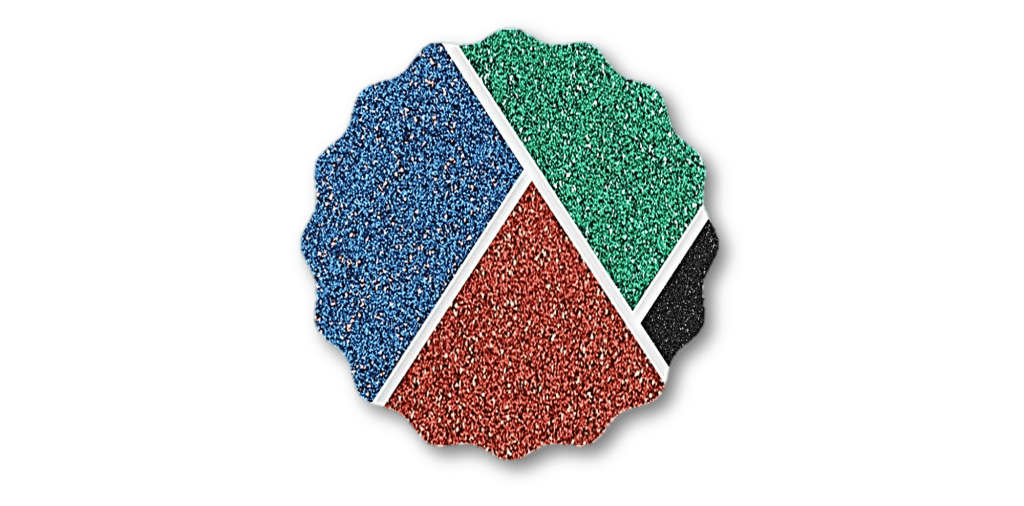
Rubber wet pour is a seamless safety surface for playgrounds, schools, crèches and parks. It is mixed and poured on site, so it follows the shape of the play area and sets into one surface with no joins between tiles.
How wet pour is made
Wet pour, also written wetpour, is made of rubber granules mixed with a binder. A cushioning base layer goes down first, followed by a top layer of coloured EPDM rubber granules that is trowelled smooth. The thickness is chosen to suit the fall height of the equipment above it.
Where it works well
- Under jungle gyms, swings, slides and spring riders
- Play areas at schools, crèches and preschools
- Public parks and estate play areas, and the paths around them
- Around outdoor gym stations
Colours and designs
Wet pour comes in a range of colours, and colours can be combined into shapes, games and zones, for example a hopscotch, a path or a separate toddler area. Tell us what you have in mind and we will include it in the quote.
Wet pour, rubber tiles or artificial grass?
Wet pour gives one seamless surface and suits busy public play areas. Rubber tiles make it easier to replace a single damaged section, and artificial grass gives a softer, green look for homes and low-traffic areas. We supply all of them, so you can compare them in one quote.
Installation and quotes
We install wet pour anywhere in South Africa, on its own or together with the play equipment. The price depends on the size of the area, the thickness, the colours and the ground preparation, so every quote is free and itemised, with every item listed separately. Read more in our guide to wet pour flooring.
Wet pour questions
What is wet pour rubber flooring?
A rubber safety surface that is mixed and poured on site and sets into one seamless layer. It is used under play equipment and in play areas at schools, crèches, parks and estates.
How thick should wet pour be?
It depends on the fall height of the equipment above it: the higher the equipment, the thicker the surface. Tell us which equipment will stand on it and we will specify the thickness in the quote.
Can wet pour go over grass or soil?
Not directly. Wet pour needs a firm, prepared base such as concrete, tar or compacted crushed stone. On grass or soil the base is prepared first, and that work is listed in the quote.
How much does wet pour cost?
It depends on the size of the area, the thickness, the colours and the ground preparation. Send us the size of the area and a few photos, and we will send a free, itemised quote.
Do you install wet pour outside Johannesburg?
Yes, we install wet pour anywhere in South Africa.